96
<!–
@media only screen and (min-width: 620px) {
.u-row {
width: 600px !important;
}
.u-row .u-col {
vertical-align: top;
}
.u-row .u-col-100 {
width: 600px !important;
}
}
@media (max-width: 620px) {
.u-row-container {
max-width: 100% !important;
padding-left: 0px !important;
padding-right: 0px !important;
}
.u-row .u-col {
min-width: 320px !important;
max-width: 100% !important;
display: block !important;
}
.u-row {
width: 100% !important;
}
.u-col {
width: 100% !important;
}
.u-col > div {
margin: 0 auto;
}
}
body {
margin: 0;
padding: 0;
}
table,
tr,
td {
vertical-align: top;
border-collapse: collapse;
}
p {
margin: 0;
}
.ie-container table,
.mso-container table {
table-layout: fixed;
}
* {
line-height: inherit;
}
a[x-apple-data-detectors=’true’] {
color: inherit !important;
text-decoration: none !important;
}
table, td { color: #000000; } #u_body a { color: #0000ee; text-decoration: underline; }
<!–
This month we focus on the relationship between the two Houses of Parliament and the rules that guide how Peers vote. The next round of ping-pong voting on the Illegal Migration Bill starts Monday and the question is: will the Labour Party give up protecting the rights of refugees?
In this issue:
– Passage of Bills through Parliament
– The Fatal Motion
– Illegal Migration Bill
– Strikes Bill
– Delays
– Community Energy
– Boycotts, Divestments and Sanctions Bill
|
<!–
<!–
The unelected House of Lords is an outdated institution and recent decisions by Labour Party Lords are pushing its constitutional role to breaking point.
The basic legal position is that Acts of Parliament require the consent of both Houses of Parliament. Over time, the dominance of Nobles over the Commons has waned, to the point that the elected Chamber is now given priority over the unelected “Upper House”. For example, the Salisbury Convention means that Lords should not block legislation that enacts policies which appeared in the Government’s election manifesto, on the basis that these were endorsed by the population in a general election.
These days the Lords are very wary of delaying or blocking government legislation – preferring to act as a “revision chamber”, but they are entitled to do so, especially on laws that were not manifesto promises, or violate constitutional principles like the rule of law. Where the Lords do block a piece of legislation, the Government can use the “Parliament Acts” to pass the legislation with the support of the Commons alone.
We have become increasingly frustrated that the Labour Party is attempting to unilaterally rewrite the role of the House of Lords, by refusing to block or significantly delay any government legislation. No matter how bad, poorly written, cruel or oppressive the Bill, the Labour Party insists that the Lords must not block it. Given that the Labour Party controls the balance of power in the Lords, they choose to allow legislation to pass that would otherwise be defeated.
We can only speculate that they are doing this in the hope that the Tories repay the favour whenever Labour next forms a government. To place all their trust in the Conservatives seems naive and foolish and means that terrible legislation like the Public Order Act and Illegal Migration Bill are being waved through when the Lords have every right to stop them.
Of course, the only sensible solution to this quagmire of constitutional niceties is to replace the Lords with an elected second chamber.
|
<!–
<!–
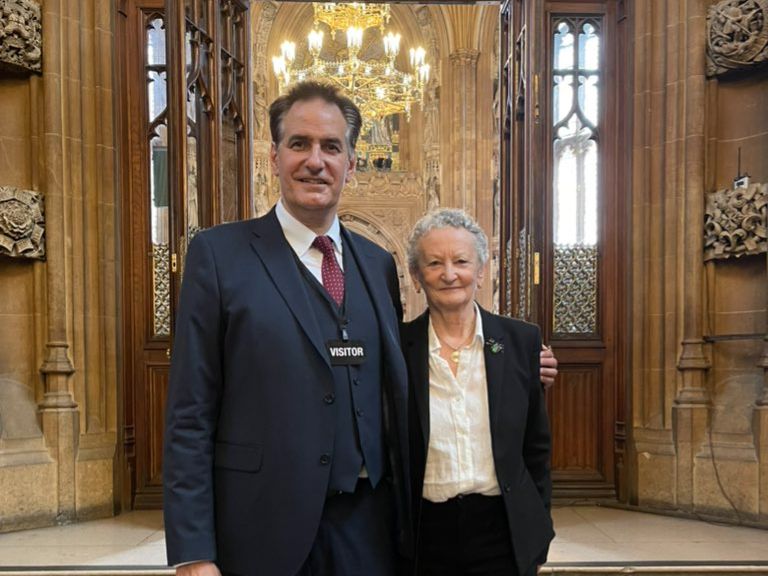
Jenny with campaigner Peter Stefanovic 13th June 2023
|
The irony of the Fatal Motion to stop Minister’s passing a draconian law that the Lords had rejected only a few weeks before, is that Jenny was trying to uphold the status quo. Making laws via Ministerial decree is a big departure from parliamentary democracy. Labour’s failure to support the Fatal Motion, despite a petition that raised 65,000 signatures in a few days, was a big let-down.
With more and more skeleton bills being passed by this Government, Ministers have been given wider and greater powers to make rules and change laws. It is very worrying that the Labour Party allowed the Government to start using secondary legislation to overturn parliamentary votes. This is a huge transfer of power to Whitehall, away from Parliament.
It is even more worrying that Labour allowed the Government to do this on a draconian law that gives the police and Home Office the discretion to decide what is and isn’t a legal protest, depending on whether they perceive it to be causing more than minor disruption. Clearly, the million strong protest against the Iraq war caused more than minor disruption and could have faced a ban. The authorities should never have such powers.
|
<!–
<!–
This nasty piece of legislation aims to break the international rules on the welcoming of refugees by automatically deporting any who arrive by means of routes that are not sanctioned by the UK Government. Given that this Government has closed down the ‘safe and legal’ routes, except for specific schemes like Ukraine and Hong Kong, this means everyone else is automatically rejected.
The Lords initially put forward a record 20 amendments, dealing with big issues like the rights of child refugees; LGTBQ+ discrimination and the slave trade. The Government has made a couple of minor concessions, but has given no ground on major issues like sticking to international law.
The Lords have now had a second round of voting with 9 of the amendments being taken forward, which we anticipate the Government will reject.
Many in the Lords, including the Bishops, wanted to vote against the Second Reading of the Bill, which would have forced the Government to invoke the Parliament Act and delayed the legislation by around a year – possibly until after the next general election. The Green Party peers supported this move by the Lib Dems, but Labour did not and the legislation was taken forward.
On Monday, Labour have another chance to work with us to stop the worst impacts of this legislation by voting again for an amendment requiring the Government to stick to international law. All the Lords have to do is to be stubborn and vote again in favour of the same amendment twice. This double insistence would stop the legislation going forward and force the Government to invoke the Parliament Act.
|
This Government have spent more parliamentary time passing authoritarian legislation, than they have dealing with any other topic. The bill banning strikes across a range of services and industries is one of the most worrying as it gives Ministers huge powers over the lives of millions of workers. As Jenny pointed out, it can force people into work even if they are sick, or on holiday. It also places legal obligations on their unions to stop anyone being absent.
|
<!–
<!–
Natalie has led on the community energy amendment to the Energy Bill. She put the amendment when Baroness Boycott was away from Parliament and supported her attempts to rally people within the Conservative Party to support community led schemes. Despite lots of cross party support from MPs, the Government has not taken this up. Jenny has made the point that self-reliance used to be a mantra within the Conservative Party but this is now side-lined as more community energy would mean lower bills and less corporate profits.
It appears that the Energy Bill has been delayed due to internal government disagreements about the way forward and may now be ditched entirely.
|
Boycotts, Divestments and Sanctions Bill
|
We are expecting a Bill to prevent public bodies from adopting their own approach to international relations, including through sanctions and divestment campaigns. Such campaigns were crucial to the anti-apartheid movement in the 1980s and helped transform the situation in South Africa.
|
Caroline Lucas MP’s Early Day Motion (EDM) calling for the Bill to be considered in the Commons has stalled at 63 signatures
- You can check if your MP has signed here and if you have any ideas about how else we can encourage support for it please get in touch
|
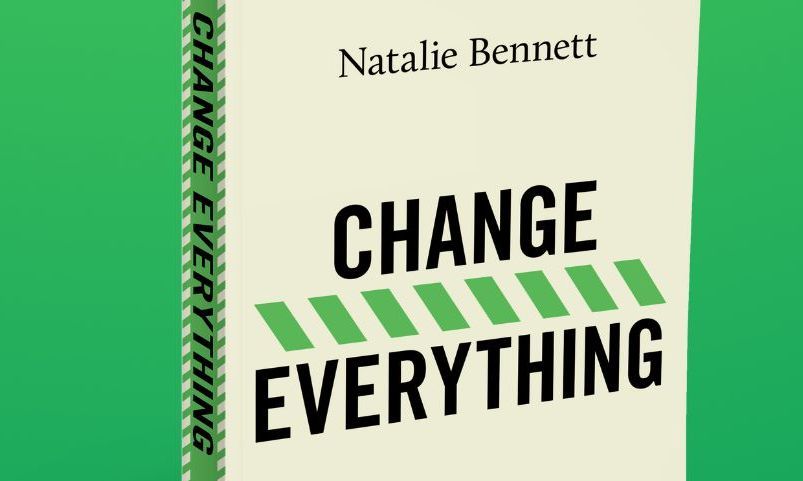
Natalie is writing a book, Change Everything: Political Common Sense for the Age of Shocks. She’s publishing with Unbound, which operates on a crowdfunding model. She now has enough subscribers to get the book into print but you can still jump in and pre-order your copy (from £10 for the eBook to £500 to be a “super-patron”, should you be feeling flush.). That means your name will be recorded inside as a supporter and you’ll be helping spread the Green message
|
To find out more about their work:
|
<!–
<!–
Please consider supporting this work. Our regular donor page is here
|
<!–
<!–
In hope and solidarity,
Jenny, Natalie and the team
|
<!–
|




 Baroness Jones of Moulsecoomb