The Green Party Drugs Policy Working Group requested Jenny initiate this debate which took place yesterday: To ask His Majesty’s Government, in light of the rise in deaths linked to cocaine, ketamine and synthetic cannabinoid use, what plans they have to review their policy on drug prohibition and the criminalisation of people who use drugs.
The Minister of State, Home Office answered for HMG:
My Lords, drug misuse deaths in 2025 were down on those registered in the previous year. Every drug-related death, however, remains a tragedy. Drug deaths are best prevented by a combination of actions, including tackling drug supply, effective treatment and recovery support, clear societal messaging about the harms that drugs do, and a robust legislative framework to deter possession and supply.
My supplementary question was:
I thank Lord Hanson for his Answer, but I did not hear anything new in there. Until the Government do have better drug policies, knowing the number of deaths from illegal drugs is incredibly important. To do that, you need to triangulate with health data, and you need to establish whether serious violence or suicide has taken place, especially for women. What measures might the Government take to make sure that their recording of deaths is actually accurate?
Lord Hanson of Flint replied for HMG:
The noble Baroness raises an important point, and I hope I can assure her that the Government take that seriously. We have asked the Advisory Council on the Misuse of Drugs to look at writing four reports for us, particularly focused on women and girls. That will include the role of drugs in domestic abuse and in wider violence against women and girls. We have also set up a working group to review matters concerning the very issue she raises, which is the recording of drug-related deaths and how they are defined across all parts of the United Kingdom.
I said at Second Reading that I was going to oppose a lot of the clauses in the Bill, and I will be standing up several times today to do exactly that. The first clause I oppose is Clause 1, and I find myself signing up to do so with some unusual colleagues—which is obviously a pleasure. I am against this clause because the Government, in order to make the court system easier to manage, are taking away an important protection from people accused of criminal offences. If we cannot get rid of the first clause, I support the other amendments in this group.
The right to elect trial by jury is an important safeguard. This clause removes that choice and hands the decision to magistrates. I have great respect formagistrates—I know quite a few and I appreciate the work they do—but that is not the issue here. The issue is whether a defendant should lose the choice of having their case heard by a jury. The Government argue that this is necessary to tackle the Crown Court backlog, but as we have already heard, removing rights is not a substitute for properly resourcing our courts. It is not going to work; that is fairly obvious from the debates we have had already.
The Bar Council strongly opposes this provision. It warns that the changes will result in more serious and complex cases being heard in magistrates’ courts, which is fairly obvious. But that concern becomes even greater when we consider Clause 5, which I will also be opposing and which increases magistrates’ sentencing powers. Taken together, these provisions mean that more serious cases can be dealt with in magistrates’ courts, with greater powers to deprive defendants of their liberty.
There is also the equality consideration, which I am disappointed that the Government have refused to address so far. Their own equality statement acknowledges that Black defendants, older defendants and women are more likely to elect for a Crown Court trial. In 2022, 26% of Black defendants elected for a Crown Court trial, compared with 15% of white defendants. The Lammy Review found that many people from ethnic-minority backgrounds had
“more confidence in the fairness of juries than … in the fairness of Magistrates’ Courts”.
So removing this choice risks further undermining confidence in a justice system where trust is already quite fragile.
There are consequences for witnesses and complainants too. Section 28 special measures, which allow eligible witnesses to have their cross-examination pre-recorded, is not available in magistrates’ courts. This is particularly important for children, people with certain disabilities, and complainants of sexual offences. With the current spotlight in our country on sexual offences and the fact that women find it incredibly difficult to get justice, this is quite an important component.
The Government acknowledge that there is insufficient data to establish how many vulnerable witnesses could be affected. How can we press ahead with something when we do not even have the data to see whether it is going to be good or bad? I do not understand. The organisation Justice also supports removing the clause.
A fair trial should not depend on whether the Government want to move one backlog to another. The right to a jury trial should not be treated as expendable and Greens such as me will always defend it.
I rise to speak to the remaining amendments in this group. Amendments 8, 67 and 75 essentially agree with the points made by Lord Thomas of Cwmgiedd. I draw the Government’s attention to their own equalities statement. It says that
“if more cases are dealt with in the magistrates’ courts, it is likely that an increased proportion of these defendants may be ineligible for legal aid when they would otherwise have been eligible if their case had been heard at the Crown Court”.
That is a pretty big admission, and I think it is something that we have to take into account. I hope that the Government will remember their own words, because it means that they are well aware that their reforms will mean more people going through the courts without a lawyer.
Many of us raised this at Second Reading. The income threshold for criminal legal aid in the magistrates’ court is much lower than in the Crown Court. As Justice points out, someone working full time on the minimum wage will not qualify for legal aid in the magistrates’ court. So the Government are moving more cases into a court where fewer people qualify for legal aid. They know this will happen. It says so in their own assessment.
Justice also points to research by Transform Justice, showing what happens when defendants have to represent themselves. They may not understand the charges, they enter the wrong plea, they struggle to question witnesses or fail to put forward information that could reduce their sentence. The consequences become even more serious when the Bill increases magistrates’ sentencing powers to two years in prison. Someone could face a substantial prison sentence without having had access to a publicly funded lawyer.
Victims can also be affected. In some cases, including assault cases, defendants are allowed to cross-examine witnesses themselves. More unrepresented defendants could mean more victims having to face questioning by the person accused of the offence. The Institute for Government has warned that unrepresented defendants can make hearings longer and more complicated. That does not sound like any sort of efficiency saving that the Government are hoping to achieve.
At Second Reading, the Minister acknowledged these concerns, and the Government’s answer was that they would look at the new income thresholds after the reforms had been implemented, depending on funding and operational considerations. I want to make sure that they are addressed before these huge changes come into effect. The Government know there is a problem; they know that more defendants will be in the magistrates’ courts, where the legal aid threshold is much lower, but they want to press ahead with the court reforms and leave the question of whether people can afford legal representation until afterwards.
Lord Leveson, and the Justice Committee have recommended increasing the income thresholds. My amendment, supported by Justice, would make sure that the financial eligibility criteria in the magistrates’ courts are brought into line with those in the Crown Court before the relevant provisions come into force. People should not lose access to legal representation simply because their case is now being heard in a different court. The Government should get this right before they bring in the reforms and not wait until people have already suffered the consequences.
I oppose Clause 3. I am particularly concerned that the Government are presenting it as a practical measure to tackle delays when the evidence suggests that it will make very little difference. The Government’s own impact assessment estimates that these provisions will save just 200 Crown Court sitting days a year—around 0.18% of current Crown Court capacity. That is a tiny return for such a huge change to the way that criminal justice is delivered.
There is also no good reason to assume that removing juries will necessarily make these trials shorter. Judges sitting alone will still have to consider the evidence and, in complex fraud cases, they may have to produce lengthy reasoned arguments. Juries also provide an incentive to keep trials properly focused and evidence clearly presented. Fraud cases often turn on questions of fact, including whether someone acted dishonestly, and juries are well placed to judge dishonesty. The independent review by Jonathan Fisher KC found that juries can deal with complex fraud cases when trials are properly managed and presented. He warned that removing juries from serious fraud trials would send the wrong message about the seriousness of fraudulent misconduct.
There is something else in this clause that really concerns me, which is the power of the Secretary of State to add further offences to the list. In your Lordships’ House we get a little fed up with statutory instruments that bring in more and more power to a Bill that we have already passed. Although these initial provisions cover financial crime and related offences, the scope can be widened through secondary legislation. It is a very real risk that restrictions on jury trial will extend beyond the cases the Government are currently talking about. Jury trial is not an obstacle to be removed whenever a case becomes difficult or lengthy. It is an important protection against the concentration of judicial power and a vital part of public participation in the justice system.
I oppose Clause 5. It will allow the Government to increase the maximum custodial sentence that magistrates can impose from 12 months to 18 or 24 months. As we have heard, it will also give the Secretary of State the power to make that change through regulations rather than through Parliament, which would allow us to consider the matter through primary legislation. My concern is about not just the length of sentences but the combined effect of this clause and Clause 1. The Bar Council has warned that this is a “dangerous experiment”, particularly at a time when prisons are already at capacity and the backlog in magistrates’ courts is growing. Increasing magistrates’ sentencing powers does not address the underlying problems of an under-resourced justice system.
Like many other Lords, I am also concerned about the delegated powers in this clause. The House of Lords Delegated Powers and Regulatory Reform Committee has specifically recommended that Clause 5(1) be removed. Its chair warned that the clause oversteps the proper limits of ministerial discretion. We should not hand the Government such a significant power to change sentencing limits without proper parliamentary scrutiny. The Government have not made a convincing case for this change. If they think magistrates should have greater sentencing powers, why will they not justify that proposal to Parliament instead of leaving the decision to future regulations? I told the Minister that I would not say this, but, while he is extremely emollient in trying to calm our fears, I am afraid he has not done so. The Government are faced with opposition from all around the Chamber. The Greens are linking with the Conservatives, Labour and the Lib Dems. Might that give the Government pause to think that perhaps they have got it wrong?
Amendment 35 and my consequential Amendments 58, 70 and 71 would replace Clause 5 with a single, simple provision. It removes the Henry VIII power of the Secretary of State to change by regulations how long a magistrates’ court can send someone to prison for, for an “either way” offence. At Second Reading, I said that I could not support expanding magistrates’ sentencing powers. This amendment offers the Government a constructive alternative, taken directly from the review on which this Bill is built.
Paragraph 14A of Schedule 23 to the Sentencing Act 2020 is a Henry VIII power. It allows a Minister to rewrite an Act of Parliament by statutory instrument, subject only to a negative procedure. That is appalling. We are not a democracy when that sort of action gets taken. Since 2022, the limit has been raised from six to 12 months, cut back to six months in March 2023 and raised to 12 months again in November 2024. That is three changes in under three years, driven by Crown Court backlogs one year and prison capacity the next. Clause 5 widens this even further. It allows the Secretary of State to set the limit at 18 or 24 months, up to double today’s maximum—again, by regulations.
The Minister told your Lordships’ House at Second Reading that the Government intend to raise the limit to 18 months next year, depending on Royal Assent. That is not what Lord Leveson, recommended. In recommendation 15 of Part 1 of his independent review of the criminal courts, he recommended that the power to change magistrates’ sentencing powers by statutory instrument be repealed and that the 12-month maximum should be made permanent. My amendment, therefore, does exactly what recommendation 15 asks.
I absolutely despair of this Government, in the sense that they seem to be backtracking on all the democratic ideas they had when they were in Opposition. I sat here and listened to all the colleagues here on the Labour Benches when they were in Opposition, saying wonderful things that I could agree with. Now, I just see the other Tory party sitting over there. It is very depressing to sit over here these days.
I wrote to the Metropolitan Police Commission last week saying:
Dear Commissioner
As you will know, yesterday (3rd November), around twenty-five campaigners were arrested outside the Supreme Court for holding up signs using the same or similar words said by Sarah Helm, the wife of the government’s National Security Adviser, who had posted on X “God help us authors who support Palestine and Palestine Action.” Her words were widely reported in the media with the police stating it “does not meet criminal threshold.” This seems common sense advice and I commend the police for taking no action. However, it is very confusing for members of the public when they are subsequently arrested for holding up signs using similar language, such as “God help us normal people who support Palestine and Palestine Action.”
I am concerned about reputational damage being suffered by the Met Police as a result of the arrests of those supporting Palestine Action.
There appears to be a lack of clarity about what is and isn’t support for this proscribed organisation.
I did oppose the proscription of Palestine Action with an unsuccessful Fatal Motion in the Lords and worry it is damaging both the public’s support for anti-terrorism laws and the police’s enforcement of them. The proscription of PA has led to over four thousand people being arrested for completely non-violent protests, such as sitting silently while holding up a placard. It has diverted police resources, clogged up the courts and could result in further over-crowding of prisons. Given the nature of the crimes committed by those on early release, as a result of over-crowding, it does feel like the police and the Govt have got all their priorities wrong.
It has also resulted in a great deal of confusion about what does and doesn’t constitute terrorism.
After twelve years on the Metropolitan Police Authority, I felt I had a good understanding of the serious nature of dealing with terrorist threats, but the proscription of Palestine Action has overextended the definition and a large section of public opinion does not agree with it. There are examples of the police ignoring a protest in one part of the country, but making arrests for exactly the same form of protest in another area. A form of words on a placard my get a person arrested on one day, but fail to get a reaction from the police on another.
The police clearly have a large degree of operational discretion in how they apply the rules on the proscription of Palestine Action and I therefore urge you to focus the Met’s scarce resources on the public’s priority of dealing with violent and serious crimes.
I always love following Lord Carlile, and hearing about his exploits. The story about judges’ acquittal rates is perhaps because they are deeply misogynistic—but I do not know. At the start Lord Ashcombe, talked about there being a lot of great legal minds in the Chamber. I am sure there are, but clearly I am not one of them. However, I have quite a strong sense of fairness and justice, and therefore some concerns about the Bill. I apologise to the noble Lord, Lord Stace, for not hearing his maiden speech, but I promise to read it in Hansard and give him feedback tomorrow. I am sure he would love to hear it.
I move to the Bill. Nobody disputes that 14 years of Conservative underfunding have left our Crown Courts with an appalling backlog and that victims are paying the price. The Government say that they want to get justice moving; of course I support that, but I would like to see a fix for the problems that stop courts hearing cases. The Bill is moving around who gets to hear them and taking away some of the safeguards that protect defendants. I feel that is the wrong approach. The Government have rightly dropped their proposal to remove jury trials for less serious cases in the Crown Court, but keeping thousands of cases in magistrates’ courts, without a choice, is still a restriction on jury trials, and the Government have still not shown that they will solve the backlog.
We need to ask a simple question: why are cases not getting to court on time and what would make a difference? The Government expect their proposals to move about 25,000 cases a year away from the Crown Court, but where are those cases going? The court system already has a huge backlog, fewer magistrates than it had a decade ago and shortages of legal advisers. The organisation Justice has warned that there is insufficient evidence that magistrates’ courts can cope with this extra work, so why are the Government pressing ahead? Moving cases between courts does not make the problems disappear, and removing some of the right to jury trials does not magically make a case straightforward or ensure that a hearing can go ahead.
The Government’s proposals also risk leaving more defendants without legal aid. People who might have had a lawyer in the Crown Court could end up representing themselves in the magistrates’ courts, even when they face the possibility of prison. That is massively unfair. It can also mean longer, more complicated hearings, and the accused cross-examining victims on cases such as assault. The Government are chasing efficiency savings in the wrong places while risking changes that could undermine them and our justice system.
On the right of appeal, Justice has highlighted how often appeals against magistrates’ decisions succeed. These appeals are a safeguard against wrongful convictions and wrong sentences. Making people seek permission to appeal, often without a lawyer to help them, risks shutting people out of justice.
If there is a risk that these changes will make an already difficult experience of the justice system even worse for people who are vulnerable or marginalised, we should examine that properly before going ahead. You cannot always put things right after someone has been denied a fair hearing.
What about the age and background of magistrates and who is able to volunteer during the week? The noble Lord, Lord Macdonald, explained this very clearly. If the Government are serious about clearing the backlog, they need to deal with what is actually going wrong. Trials are delayed because witnesses are unavailable, defendants are not brought to court, and court buildings and technology need investment. There are shortages across the criminal legal workforce, and legal aid must be sufficient to ensure that people can get proper representation. These problems are not solved by taking away a jury or making an appeal harder; they are solved by making sure that hearings go ahead, that courts have the staff and facilities they need, and that cases are properly prepared. Not much of that is in the Bill.
I support the new measures for witnesses, but I cannot support provisions that remove the right to elect a jury trial, restrict the right of appeal and expand magistrates’ sentencing powers. I also cannot support the measure in the Bill to allow the Secretary of State to add further offences to the list for judge-only trials through secondary legislation. That means that a future Government could extend the restriction on jury trials even more, without having to bring forward primary legislation for Parliament to debate.
I will press the Government to explain how they intend to address the real causes of delay and to provide a properly funded plan for courts expected to take on more work. They were right to rethink that part of the Bill, but they should now look again at the rest.
I am also worried about the bigger picture here. I did not expect to spend my time having to fight to defend basic civil liberties against this Government, but here we are, arguing about jury trials while the Government expand curbs to protesting, facial recognition surveillance and restrictions on people seeking asylum. Taken together, they give the state more power over people and take away some of the safeguards that are supposed to protect us from the misuse of power. It is often minorities, protesters and people who challenge those in authority who are most exposed to those consequences. We have only just repealed the Vagrancy Act 1824, which grouped the poor and the homeless together with criminals. That is how we saw them then. I dread the justice system getting harder for people to access and harder on the people who need to access it.
My speech to my amendments on the first day of committee stage: I have six amendments in this group and will speak first on five of them—Amendments 64, 65, 67, 69 and 140. The purpose of these is to clarify which functions of higher education providers fall within the scope of Schedule 2, so that there is greater certainty about where the duty of candour and accountability apply.
The Government have acknowledged that universities perform public functions, including teaching and awarding degrees, but their position leaves important questions about the boundaries of those functions to be resolved on a case-by-case basis. What about activities such as student welfare and pastoral support, safeguarding, accommodation, complaints and appeals, or the way that universities respond to serious incidents? These are a big part of what universities do, and the decisions they make can have a huge and lasting impact on students’ lives.
These amendments spell out exactly which of universities’ activities I am talking about; they cover admissions and assessment, academic progression and disciplinary processes, student support and welfare, safeguarding, accommodation, complaints and appeals, and responses to serious incidents, including student deaths and subsequent investigations. These amendments seek to give us a clearer picture of which university activities should count as public functions and would help ensure that the right standards of openness and accountability apply.
The importance of this question becomes painfully clear when we hear from families who have lost a child while they were at university. A parent who contacted me through ForThe100 told me that their son died by suicide in April 2022, just four hours after the university had informed him that a restriction it had already imposed upon him had been escalated to a complete ban from campus. The family had not known that he was facing disciplinary action. After his death, the parent described to me a long and difficult process of seeking answers, including the struggle to obtain information and get the university to answer their questions properly. Even after the inquest, their attempts to obtain a full response to their concerns continued for a further 18 months. Families should not have to spend years seeking information, answers and accountability while they are already dealing with an unimaginable loss.
The National Review of Higher Education Student Suicide Deaths, published in 2025, recorded concerns from families about transparency, communication and their involvement in investigations. It recommended a duty of candour tailored to higher education, and those concerns underline why we need to be clear about the responsibilities that apply when universities make decisions around students’ welfare and respond to serious incidents.
A government letter of 1 September recognises that some university activities are public functions, but it leaves just too many questions about the other important areas. It does not make clear how the ethical conduct requirements in Chapter 2 are intended to apply to universities. These amendments would help to clear that up. They would give universities, students and their families a clearer understanding of where these responsibilities lie, while still allowing individual circumstances to be considered.
If there are concerns that extending these provisions to higher education would mean that universities become responsible for providing healthcare or guaranteeing every student’s safety, I can reassure your Lordships that this is not what these amendments are about. There is an important difference between a duty to take reasonable steps to prevent harm and a duty to be open and honest about what happened if something goes wrong. The Bill’s duty of candour and assistance is about openness and co-operation in the inquiries and the investigations it covers; it means being prepared to explain what an institution knew, what it did and why.
I will put four specific questions to the Minister, reflecting concerns raised by families through ForThe100 on the Government’s intended treatment of higher education. Do the Government consider pastoral support, student welfare, safeguarding and university-arranged accommodation to be activities forming part of the provision of higher education? Does that extend to academic disciplinary processes, student complaints and appeals, and responses to serious incidents including student deaths? If these are public functions, is there a reason that they should not be expressly identified in Schedule 2, rather than leaving the boundaries to case-by-case judicial interpretation? How do the Government aim to ensure that Chapter 2, on ethical requirements, applies to the relevant public functions of higher education providers? I would really like the Government to explain how the Bill will operate where a university’s activities involve both public functions and arrangements with private contractors.
My Amendment 66A moves on to all of your Lordships, because I do not understand why politicians like us should be held to a lower standard of honesty than other public officials. That is what this amendment is about. Why are Members of this House and other UK Parliaments and Assemblies excluded from this new offence of misleading the public? Is it clear enough when the offence applies? The Government have decided that intentionally or recklessly deceiving the public on matters of serious public concern should be a criminal offence for public officials. We are talking about serious deception proved to the criminal standard in court, not making a mistake, getting something wrong or changing your mind. The offence will apply to Ministers, civil servants, police officers, members of the Armed Forces and other public officials, but Members of this House, the House of Commons, the Scottish Parliament, Senedd Cymru and the Northern Ireland Assembly are excluded. I simply do not understand why that distinction has been drawn. If the purpose is to improve accountability in public life, should that principle not also extend to this House—to people who actually make laws, scrutinise the Government and speak to the public on matters of national importance?
There is a second issue that this amendment is for: uncertainty about when someone is acting in their official capacity. The Bill makes the offence dependent on a person acting in their capacity as a public official or public authority, but it does not clearly define what that means. People should be able to understand the law before they act. It has been raised that the Law Commission previously warned, in its examination of misconduct in public office, that the meaning of actingin an official capacity was insufficiently clear. The Bill abolishes the common law offence of misconduct in public office because of the uncertainty around it, yet the new offence of misleading the public relies on almost the same language. Should we not be careful not to repeat the very problem that the Bill is meant to address? I was going to talk about the case against Boris Johnson, but I will skip that.
When creating a new criminal offence, should Parliament not seek to provide as much clarity as possible, rather than leave key questions about its scope to be settled by the courts? This amendment would bring Members of this House, the House of Commons, the Scottish Parliament, Senedd Cymru and the Northern Ireland Assembly all into the definition of public official for the purposes of duty of candour and the offence of misleading the public. It would apply the principle of accountability to those who make our laws as well as those who implement them.
Secondly, it would protect parliamentary proceedings and political opinion. Nothing said or done in the proceedings of any UK Parliament or legislature could be caught by these offences. The amendment would also expressly protect expressions of honestly held political belief or opinion by Members of those Parliaments and Assemblies, so it is not about restricting debate in Parliament or criminalising political differences; it is about holding politicians to account for serious deception.
Thirdly, it would clarify when certain officeholders are acting in their official capacity and would provide that Members of this House and other UK Parliaments and Assemblies, Ministers and specified mayors are treated as acting in their official role when speaking to the public about matters of serious public concern, while they are still free to express their political views. Communications made in a judicial capacity or concerning solely private life, family life or private business are obviously excluded.
Fourthly, it would clarify what constitutes harm for the purposes of the offence. It would provide that harm can include undermining public confidence in public authorities, public officials, the exercise of public functions or democratic processes. Then it identifies six purposes for which such a communication might be made. It covers situations where deception could have serious consequences, such as misleading the public to justify military action, concealing risks to public safety or misrepresenting how public money is spent.
This is Bill needs clarification. I have a lot of sympathy for almost all the amendments that we have heard today. I urge the Minister and the Government to actually listen and act on what they are hearing. There are difficult questions where criminal law and political speech intersect, but difficulty is not a reason to look away; it is a reason for us to engage, examine the wording carefully and get it right. I support Amendment 66 from Lady Coffey, as well.
I congratulate Lord Hunt, on bringing this debate. I also want to apologise to him, because I am always surprised by how passionately he talks about climate change. That is on me. Sorry about that. It is wonderful to listen to.
I have met the new Prime Minister a few times and I have a lovely photograph on my phone of him and me at Glastonbury last year. I sort of thought we could work together, but the more I see what is happening and going through, the more I am beginning to think it will not be possible. It seems as if the slow-moving, stagnant mechanism of government has got its claws into him and he is not thinking very creatively any more. I hope I am wrong. We shall see over the next few weeks and months.
I want to mention three things that are crucial for the future of this Labour Government, which will all help society as well as the environment. We have to accept that climate chaos is the new normal. Thousands of people died this summer in the heat and that is going to keep happening if we are not very careful about adapting to it. People arriving at A&E with heat exhaustion and so on is also going to be the new normal. This Government must not make it worse by going ahead with the Jackdaw gas field and Rosebank oil field. That is folly. What they should be doing is what they have just scrapped—putting solar panels on every supermarket car park and every roof, everywhere they possibly can. That is the sort of thing they ought to be doing to be creative about combating climate change. We need to adapt to hot summers. A tiny measure would be to put shutters on all the windows, as in France. I have lots of ideas and I am quite happy to chat them through.
The second thing is to help save the NHS, not by privatising it but by remembering that prevention is better than cure. If you cut pollution, you cut the number of people going into hospital. You cut the number of children whose lungs are so stunted by pollution that they have lifelong problems with their breathing. Well done to Sadiq Khan here in London, where he has massively cut air pollution. We should have low emission zones across the whole country, as they do in mainland Europe.
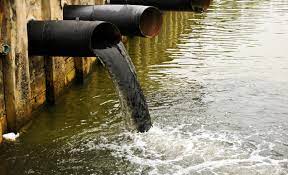
Thirdly, one big way to reduce pollution would be to take the water companies into public ownership. The Prime Minister mentioned those words yesterday. I would like to think he means renationalisation, but I do not know any more, because he keeps changing his mind. I have stopped paying the sewage part of my bill. I asked Thames Water how much that part was. I was happy to pay for the water, obviously, but I was not prepared to pay for the sewage it was dumping in the Thames. It told me that it did not work out the bill like that, so at the moment I am not paying my bill. We will see if it takes me to court before it goes bankrupt. We stopped the poll tax with a campaign of non-payment. Civil disobedience is possibly the only way to fight companies such as the water companies which are operating in a way that is a disbenefit to the whole of society. I say to the Government that the Green Party always has loads of very practical ideas and I am very happy to share them.
I support the Bill and hope that the Government will listen to some of the amendments that will be tabled, because it can be improved. It seems that noble Lords from all around the House agree that it is a stain on the country when families who have suffered so much should then have to fight the state for the truth and for understanding that it did wrong.
Public institutions should tell the truth, even, or particularly, when the truth is uncomfortable. Hillsborough should have changed this culture, but again and again what we are seeing is the same instinct—the same culture—to protect the institution rather than the people it has failed. All tribute to the Hillsborough Law Now campaign for the fact that it pushed so hard and made us listen. In fact, many of us have been calling this the “Hillsborough Bill” from the start.
Of course, this goes much wider than Hillsborough. We have heard of the incredible losses that people experienced, but there is the Post Office scandal, the infected blood scandal, the Grenfell scandal and the Manchester Arena scandal—scandal after scandal where institutions cared more about protecting their reputation than they did about helping the people who have been impacted.
The Bill will be an important step in changing that culture, but only if it is tough and only if we understand that you do not change a culture just with words. A lot of processes have to really work inside it. For example, making something a criminal offence will not change that culture on its own. I welcome Clause 10 and its duty on public authorities to promote and maintain ethical conduct, but that needs to mean more than just another policy document. It needs leadership and proper monitoring, alongside practical codes of practice. The question should not simply be, “Has the law been complied with?” It should be, “Has the culture changed?”
The Bill rightly creates consequences when a public authority fails to meet its duty of candour, including the possibility of financial penalties. But if a public authority is fined, it is the taxpayer who pays. How on earth is that a deterrent? We really have to rethink these things.
We need to be clear about who is accountable when there is serious institutional failure. I am not suggesting that every institutional failure is the personal responsibility of a chief executive, but where those at the top are responsible, there needs to be a clear line of accountability. Obviously, this would apply to water companies as much as any other sort of organisation. Codes of practice mean that people can speak and can be judged on what they say.
I emphasise the role of whistleblowing. I have had an experience with a whistleblower myself, and if I have time at the end I might talk about my little brush with a public institution that lied to me and distorted things. It shows that almost every public institution will hide its wrongdoing if it possibly can.
Of course, all this raises the wider question: what about politicians? How are we going to pass a law that does not include ourselves? Why is it that everybody else has to tell the truth but not elected politicians and Peers? That is very wrong. It is wrong to pass a Bill that does not include us. I am not questioning parliamentary privilege—I accept that we can protect political debate—but we have to draw a line around deliberate deception. If we are prepared to demand candour from public servants, surely we should be prepared to ask it of ourselves.
Do we have the legal capacity to deliver the Bill? The Government anticipate an increase in legally aided inquest cases from a few hundred to potentially over 11,000 per year. I hope this will be off-set by the fact that the duty of candour will mean swift justice as opposed to long, drawn-out cases. That would be a really positive result.
University life ought to be covered in the Bill as well. I am not sure which bits are covered and which are not. How will the duties of candour and ethical conduct work in practice in higher education? What happens after an inquiry or inquest? What is the point of establishing the truth if nobody is responsible for making sure that changes happen?
My experience of being lied to by a public institution was being lied to by the Met. Back in 2012, somebody in my team at the London Assembly suggested that I ask for my record with the police. Other people had been doing it. The police very kindly sent me a report. They had me on their domestic extremist database, which obviously, for a rabid Green like me, was useful notoriety. I really did not mind at all. There were only 17 entries on this report and every single one was something that I had boasted about, either in newsletters or on social media—speaking to a rally in Trafalgar Square, going on a bike ride with some protesters and that sort of thing. I laughed at this. I thought it was so trivial: why on earth had they spent all those years trying to compile a report on me when I was telling them what I was doing anyway?
Later, however, a whistleblower came forward and told me that in the same month after I had asked for my report, he saw three officers engaged in physically destroying a number of police records by shredding. He believed that all those records were related to me. There were in excess of 30 reports. One of those officers then began to electronically delete a number of police records from a police database. Again, the whistleblower thought those records were about me. He had an absolutely miserable time afterwards in the Met and finally left. He said that he did not become a police officer
“to monitor politicians or political parties, nor to pay casual disregard to policy and procedure”.
Whistleblowers are people who we have to protect very seriously. We have to make sure that they are not driven out of their jobs by people who do not want to be reported on.
I very much support the Bill. I hope that we can amend it and make it much better.
My Lords, in the early 1990s, I worked in Tigray, northern Ethiopia, at Axum, which is more or less on the southern border with Eritrea. I was there for a few months as an archaeologist. Before I went, I did hardly any research about the area. My life at the time was travelling around the near East to different digs, and I had got a bit blasé about new countries, new currencies and new languages.
We were lodged in Axum in a very basic but secure hotel, a bit like a Roman house—three sides and well fenced with a big gate on the fourth side. On such digs, one worked with local people who also dig and while we worked, we chatted. The locals came across as subdued, very thin and did not talk much about their lives past or present. Much later, I realised, of course, that they were suffering from quite severe trauma.
The food at the hotel was very basic. After long days working at 6,000 feet—at one point, I had 12 small trenches open on a hillside, which meant quite a lot of exercise—we came back to almost always the same meal: boiled goat, pasta and tinned tomato sauce. I was vegetarian at the time but as I lost weight quite quickly, I began to eat the goat meat as well. Our hosts would go to the market, buy three little goats at a time and let them graze tethered together in the grass inside the hotel. Then, one day, there would just be two grazing and fresh, boiled goat on the menu. The lack of vegetables and fruit was not because the local people were not good at farming and growing but as a result of past burning of crops and destruction of trees and bushes—plus, of course, the denying of food from international organisations.
This was all caused by the conflict of a few previous years. For example, in 1989, there was an advance southward by the rebel forces of the Ethiopian People’s Revolutionary Democratic Front, or EPRDF, a coalition led by the Tigray People’s Liberation Front—the TPLF. The rebels thrust to within 100 miles of Addis Ababa and to fight the TPLF, the authorities forcibly conscripted tens of thousands of young men and boys, some as young as 13 or 14, in violation of international law and Ethiopian regulations on military service.
A year later, in 1990, there was a major defeat with the loss of the port town, Massawa—on the Red Sea coast to the north of Eritrea—to the Eritrean People’s Liberation Front, the EPLF. Is everybody keeping up? During the fighting, 200 civilians were killed, many of them kept hostage as human shields by retreating government forces. Massawa was repeatedly bombed by government aircraft using napalm or phosphorus bombs, high explosives and cluster bombs. Main targets were places where civilian refugees were encamped outside the town.
About 25,000 tonnes of food donated by international humanitarian organisations were burned and the Government prevented a ship carrying relief supplies docking by threatening to attack it. On numerous occasions, soldiers in garrison towns near the front line arbitrarily opened fire on local residents, including women and children. Local women were forced to work as cooks, cleaners and prostitutes with the soldiers.
A year later, in 1991, there were killings of demonstrators who were protesting against the new EPRDF Government. A major humanitarian crisis developed as a result of the war, which led to a widespread famine—hence the food we were eating as archaeologists, but which was probably a lot better than what the local people were managing to eat. It also inflicted immense economic damage on the region, with the cost of rebuilding alone estimated to be tens of billions of pounds. But it was not a genocide, apparently.
Then, nearly three decades later, in 2020-22, there was an acknowledged genocide committed in Tigray. Estimates suggest 162,000 to 600,000 civilians were killed, with over 120,000 women raped and more than 6 million Tigrayans affected by violence, displacement and famine. More than 2.2 million people were displaced, and the destruction of healthcare and social infrastructure left the region in crisis, with maternal mortality rates quadrupling.
This is a deeply traumatised country. In 2024, the Australian Greens expressed deep concern over the continuing humanitarian crisis in Tigray, citing the New Lines Institute genocide report. They believe the actions of Ethiopian and Eritrean forces may constitute genocide and urge the Australian Government to support accountability. I thank the noble Lord, Lord Alton, for bringing this debate: we here must do the same, and I hope the Government listen to our debate.
I would also like to mention the Armenian genocide of 1915 to 1916. Of the around 1.5 million Armenians who lived in the Ottoman Empire in 1915, at least 664,000 and possibly as many as 1.2 million were killed in massacres or individual killings, or died from systematic ill-treatment, exposure and starvation.
As of today, the UK does not officially recognise that genocide, as it is
“not for governments to decide whether genocide has been committed as this is a complex legal question”.
However, it
“recognises the terrible suffering that was inflicted on Armenians living in the Ottoman Empire and acknowledges the strength of feeling regarding this terrible episode of history”.
Well, that is good, then, that they recognise the suffering.
Of course, there is the genocide in Gaza, which other noble Lords have mentioned. There are recommendations for the Government from ActionAid which would end our Government’s complicity and uphold their obligations under international law. They should act urgently, consistently and concretely to prevent and respond to atrocity crimes, crimes against humanity and genocide.
To me, as someone who does not talk about this issue a lot—although I talk about human rights a lot—it seems a rather haphazard process as to when a humanitarian disaster becomes an atrocity, a massacre or a genocide. My view is that the UK must upholdinternational law consistently, support accountability wherever violations occur, and ensure it is never complicit in the crimes it claims to oppose. It really does not look like that at the moment.
Last week I attended the Cenotaph to lay a wreath on behalf of the Green Party for the 1,500,000 Armenians who were killed – starved, tortured and murdered – between 1915 and 1917. 37 countries recognise as genocide and the UK still does not. It’s time we did.