
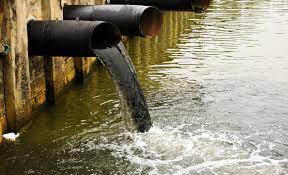
If I look at this from a completely different perspective, possibly from the perspective of the previous Government, it was a remarkable success story over 14 years because we had huge growth in sewage and pollution and it had a multiplier impact on gross national product. Growth is not an indicator of happiness or of the economy being run for the benefit of many. It is a nonsense soundbite for the economically illiterate and needs to be deleted from this legislation
Following Lord Russell, is very useful because I agree very much with his last few statements. This is an incredibly helpful group. The Labour Government would be very well advised to take all these amendments. They are so helpful, reasonable and sensible and bring in issues that I think have been left out without any rational reason.
I deeply regret not having signed Amendment 29 in the name of Lord Sikka. I agree with him completely. In fact, I support most of the amendments in this group. I signed Amendment 78 because who does not want regulators of a public service to work in the interests of the public? That is a very clear statement to make, I would have thought, and it is quite necessary, even though it seems so obvious.
Amendment 84 is in my name. I admit that when I tabled this amendment to remove the duty of economic growth from water companies and regulators, I had not really appreciated that if I looked at it from a completely different perspective, possibly from the perspective of the previous Government, it was a remarkable success story over 14 years because we had huge growth in sewage and pollution—well done, guys—and it had a multiplier impact on gross national product. It is so gross that other countries see it as indicative of the UK’s approach to running privatised services—that is, not very good. When we have a river full of dead fish, the authorities buy more fish to replace them. That is economic growth—a huge success. When E. coli is found in our water systems, we get a double hit of economic growth. There is the extra spending by the NHS on treating all the cases of gastro-enteritis and all the extra money spent on plastic bottles of water handed out when consumers cannot drink from the tap. We even have the prospect of a rain-soaked country like ours spending millions on hiring supertankers to import drinking water from Norway. That is extra spending and extra growth. I can see that growth is a success factor in the previous Government’s estimation. Of course, we also cannot forget the staggering growth in shareholder dividends and CEO salaries. When these private water companies take money out of the hands of bill payers and help the rich to buy new private jets, that also adds to GNP.
My problem is that this kind of GNP adds to most people’s unhappiness. In fact, that is why the promotion of growth for growth’s sake is complete nonsense. I do not understand why anyone would advocate that. The more that rivers are polluted, the unhappier the lives of everybody using that space, whether they are dog walkers, anglers, wild swimmers or nature lovers. The more money that shareholders and CEOs get, the less happy the bill payers are about 40% of their money being spent on debt repayments and dividends. Growth is not an indicator of happiness or of the economy being run for the benefit of many. It is a nonsense soundbite for the economically illiterate and needs to be deleted from this legislation.
On Amendment 85, also in my name, if Ofwat had been given a duty to protect the environment when it was set up decades ago, we would not be in the mess that we are. There would have been a clear connection in Ofwat’s role between signing off bill payers’ money to fund environmental improvements and ensuring that those improvements actually happened. Ofwat needs two sets of books open on its desk all the time. The first would show the real state of the industry’s finances, including the accounts of the big financial businesses that own the water companies, and the second would show whether those companies were environmentally solvent. By that, I mean whether they are capable of meeting the environmental standards on clean water and the obligations to maintain the health of the waterways.
Whether Ofwat is competent enough to carry out this new duty, or any other duties, is a completely separate debate. We have to remember that Ofwat was meant to be looking after the interests of bill payers but has completely failed to do so. It has allowed the water industry to become owned and controlled by a superstructure of financial institutions that use clever scams to fleece the bill payer in ways that Ofwat has appeared to be completely oblivious to.
We know that if this Government allow Ofwat to remain the main regulator of private water companies over the next few years, its role must include the environment. Fixing the regular discharges of sewage into our waterways, along with the polluting run-off from agriculture, is by far the biggest financial challenge the industry faces. If Ofwat does not understand that duty, the regulation will not match up to the challenge.
I am afraid the Government did not turn out very well on climate change and our ecological crisis in the Budget. They do not seem to understand how climate change comes down to the lowest level and affects every single individual, and I would be really happy to help explain that. It is time to put this particular duty on the environment into the legislation.
Later in same debate: Amendment 37
Moved by Baroness Jones of Moulsecoomb
37: Clause 2, page 5, line 29, at end insert—
“(7A) A sewerage undertaker must have regard to opportunities for nature-based solutions to be used to reduce pollution and to deliver other environmental benefits when preparing and publishing a pollution incident reduction plan.”
Member’s explanatory statement: This amendment would require consideration of opportunities to use nature-based solutions to address pollution within pollution incident reduction plans.
Read the whole debate here
 Baroness Jones of Moulsecoomb