
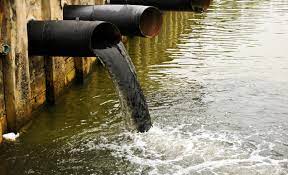
The Parliamentary Under-Secretary of State, Department for Environment, Food and Rural Affairs (Baroness Hayman of Ullock) replied for HMG: Reservoir operations must comply with water framework directive objectives. Water companies are required to follow the drinking water safety planning approach and must assess risks to drinking water from the water source that it is taken from until it reaches consumers at the taps. The planned raw water sources to supply the Havant Thicket reservoir have been monitored and mitigations have been proposed where required, including for emerging substances.
My follow up question: I thank the Minister for her Answer, but I am deeply unsatisfied with it, because I assume that it is Southern Water itself that has monitored and checked the sewage effluent that is going to be put into Havant Thicket reservoir. We need a reservoir. We desperately need more water sources, but we cannot trust Southern Water to audit its own discharges. Can the Government do what is being done in countries such as Singapore and create an expert panel to audit exactly what is going into that water supply? The forever chemicals that I have referred to are highly poisonous and pernicious.
Hansard record of the debate here: Havant Thicket Reservoir: Pollutants – Hansard – UK Parliament
I wrote to Southern Water about Havant Thicket reservoir in April saying:
Thank you for your letter expressing concern about the video I posted on twitter on 11 April 2026 regarding the Southern Water proposal to discharge recycled effluent into the Havant Thicket reservoir. You will appreciate that there are multiple concerns about effluent recycling and the content of my video reflected concerns raised by the local community which I share.
I was very interested to visit the Havant Thicket reservoir site, which since the 1960’s, was always planned to be filled with local spring water which otherwise would flow out to sea. This provided a unique biodiversity opportunity to create the first chalk spring fed reservoir in the world. This proposal was, and still is, widely supported by local people. Community representatives made it very clear to me that they feel the reservoir has now been ‘hijacked’ by Southern Water for their effluent recycling scheme.
I appreciate that the final effluent from Budds Farm Sewage Works will be given further treatment before being discharged into the reservoir. However, information from the operation of effluent recycling plants in other countries, and the trial plant operated at Budds Farm, confirm that contaminants of concern will get through the treatment process. As an example, this can include PFAS chemicals for which safe limits are poorly understood and which can bioaccumulate in the environment, as shown by recent studies in Langstone Harbour by Portsmouth University.
Your response suggests that there will be high level of regulatory control of the effluent recycling process, but the public are concerned that this will not be the case. In England water companies are in private ownership and the mechanism for independent audit and control applied in other countries is not currently in place here. With trust in water companies at an all-time low this is a significant concern.
•RAPID confirmed to the Water Matters community that the existing Environment Agency discharge consent process will not be able to set permit levels for many of the contaminants of concern.
•The Drinking Water Inspectorate will have minimal involvement in the effluent recycling plant. Because the discharge will be into an environmental buffer they will not regularly or routinely audit the plant.
While the project has been allowed by RAPID to pass through the gated process, regulators have previously expressed concerns about the lack of progress on environmental impact assessment and public consultation.
Customer surveys have indicated a preference for more natural solutions such as new reservoirs, aquifer storage, and catchment management. Customer insight that is based on giving focus groups just one side of the story with the emphasis on the advantages cannot be relied upon to test public opinion. The outcome of the Southern Water public consultation in 2024 indicated that only 23% or respondents supported effluent recycling via Havant Thicket reservoir. Public support would have been even lower if the company had taken into consideration the 388 (39%) responses sent in by email / letter which were not included in the summary statistics, despite that being a publicised way of responding to the consultation. A national debate is needed as to whether effluent recycling is the way forward in a country where we get so much rain, given that the scheme in Hampshire is likely to set a national precedent.
It is also clear that not all alternative water resource solutions were considered before Southern Water selected effluent recycling as the way forward in 2021, and it appears that the Company did not follow the statutory consultation process when they made this material change to their plan, depriving the communities who are most impacted by effluent recycling the opportunity to comment at the formative stage of the plan. Solutions that you indicate are being investigated now, should have been looked at before effluent recycling was selected. Bringing forward lower energy more sustainable sources now which work with climate change (lower emissions & take advantage of forecast wetter winters) should be a priority allowing more time for technological advances in effluent recycling and desalination to be developed to make them more sustainable. This would be in line with the Paris agreement on Climate Change, to which the UK is a signatory, and the company’s zero carbon commitments.
I share the concerns expressed by the local community and agree that we should take a step back from effluent recycling until:
- There has been a national debate about whether this is the best way forward in a country where we get plenty of rain, before this scheme sets a precedent.
- The regulatory framework is in place to ensure independent scrutiny of the design, operation and monitoring of plants, including for improved hazard control in sewer catchments and discharge limits for contaminants of concern.
- All alternatives have been properly considered and prioritised, especially those that will work with climate change.
I wrote again in June saying:
Thank you for your letter dated 5th May 2026 setting out Southern Water’s position in relation to
the Hampshire Water Transfer & Water Recycling Project (HWTWRP) and your offer of a meeting
with yourself and perhaps regulators and Defra. I welcome a meeting and would myself invite
some Green councillors from the community who I met in Havant, along with the Technical Advisor
to the Water Matters community (Tracey Viney). However, I understand that the Development
Consent Order application for the HWTWRP was submitted by Southern Water on 21 May 2026,
which means that you are pressing ahead with this project regardless of the lack of public support
(shown by the 2024 consultation to be less than 23% – see Table 3.1) and am not therefore
convinced a meeting would be of any value? Clearly you want to brief me on Southern Water’s
interpretation of events and the facts, but is there any expectation that you might reconsider any
aspect of the scheme? As without this a meeting would be a waste of everyone’s time as we can
brief ourselves remotely and I don’t take kindly to long power point presentations!
You have picked up in your letter on a number of matters raised as concerns and I asked the
community to consider your information and provide feedback on 3 of the topics raised to explain
the concern:
- Contaminants of concern passing through the treatment process.
- Lack of regulatory control compared to other countries using effluent recycling.
- Lack of robust consultation prior to selection of effluent recycling in 2021 and subsequently.
This confirms for me that the concerns raised are significant and I am aware that there are also
other concerns raised by local Green Party councillors.
I very much hope to hear that Southern Water has room for listening and understands that
compromising for the good of all can be a strong move.

