Environment Bill Committee Stage Day 5 – Waste

We all know that the international waste economy is a nasty, polluting system, where the richest countries are using the poorest countries as dump sites—as giant landfill sites. Many people would be outraged to see that the recycling that they so carefully do is just baled up and dumped on poor countries and among poor communities, who then have to suffer the pollution that it causes.

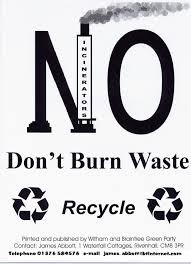
I am also concerned about the increasing capacity of UK incinerators. From what I can see, the planned capacity of these incinerators will soon far exceed the amount of waste that the UK produces. Many local authorities are, of course, tied into 25-year contracts with such businesses. This means they will be looking around for waste to burn.

Continue reading “Environment Bill Committee Stage Day 5 – Waste”

My amendment 104 to aid enforcement by OEP

Amendment 104 would enable penalties to be issued, taking into account a whole host of factors such as the gravity of the failure, any intention of negligence, and previous failures by the authority. The inclusion of the principles of effectiveness and proportionality makes my amendment wholly reasonable, and is necessary for ensuring that the ambition in this Bill is not trashed by poorly governed public authorities.

Amendment 104 would use these penalties to fund the NHS and local authorities to reduce the harms of air pollution and treat the associated illnesses, which very much affect children as well as adults. Continue reading “My amendment 104 to aid enforcement by OEP”

‘Due Regard’ is a get out clause

My Amendment 75 to the Environment Bill would flesh out the environmental principles so that they reflect a much broader set of principles, written in simple, understandable language. For example, the precautionary principle and the polluter pays principle would actually be explained and defined. It would also add things such as using the “best available scientific knowledge”, the principles of public participation and the principle of “sustainability” to take into account the health of present generations and the needs of future generations.

Taken together, these amendments would create an accessible blueprint for our country and for the planet. They would set out the clear environmental principles on which our future would be founded, and require—not simply invite—the Government to implement those principles in all areas of policy. This is the type of legislation that a Green Government would implement, these are the principles that we would apply and these are the ways in which we would make ourselves accountable to Parliament, to the courts, and to future generations. Continue reading “‘Due Regard’ is a get out clause”

Environment Bill: My air pollution amendment

I have worked the issue of air pollution on since 2001. The sources of air pollution are widespread: industry, transport, buildings and agriculture are all major contributors. We have to understand how each of those can be cleaned up and improved, not just for all of us who breathe it in in the cities, but for farmers who also experience a huge amount of pollution in their daily lives.

Air pollution has been found to cause death after a coroner ruled it was a cause of death for Ella Adoo-Kissi-Debrah. The coroner in Ella’s case said that “there is no safe level for Particulate Matter” in air and recommended a reduction in the national pollution limits to bring them into line with World Health Organization guidelines, which is exactly what my Amendment 29 would do. Continue reading “Environment Bill: My air pollution amendment”

Women ChangeMakers: Women Campaigning on Air Pollution 1pm 8th March

Please join me for a conversation on International Women’s Day

I will be talking with Rosamund Addo-Kissi-Debrah, Co-founder of the Ella Roberta Foundation, Dr Maria Neira, W.H.O Director of Environment, Climate Change and Heath, clean air advocate Penny Hosie and host Andrea Carey Fuller

Register in advance for this meeting:
https://us02web.zoom.us/meeting/register/tZwrcOuqqjgrGNcHeyB3HT7yUX9uB78oxAv_

After registering, you will receive a confirmation email containing information about joining the meeting.

Burning waste: Letter to Climate Change Committee

Thank you for your response to my previous letter regarding incineration and climate change. I am writing to you ahead of the publication of the CCC 6th Carbon Budget advice to government to draw your attention to serious failures in your previous analysis of this issue.

Continue reading “Burning waste: Letter to Climate Change Committee”

Incinerators have no place in a zero-carbon world

I find it infuriating that Labour and Lib Dem councils are still approving waste from energy incinerators while their national parties declare a Climate Emergency. Labour have passed a motion at their conference aiming for zero carbon by 2030, but contracts between local authorities and incineration companies will last well beyond this timescale.

In 2016 waste incinerators officially accounted for 10.5 million tonnes of greenhouse gases and that total is going up rapidly as we burn more waste.  The real total is double that according to analysis done by the ‘No Incinerator UK’ campaign, who point out that the amount of plastic being burnt has gone up rapidly since 2011 when the government last calculated the mix of waste that was being put into incinerators.

A quick glance at oil company profits from recent years shows that plastic production has become crucial to their profitability with plastics accounting for half of global oil consumption growth to 2040. Oil, in the form of plastic, is the ideal fuel for incinerators and enables them to reach the temperatures where everything else burns nicely. We want to stop cars using petrol in the next ten years, so why are we happy for incinerators to use it?