The text below is from when Jenny gets to tell the House about the amendment she has tabled. The links are to Hansard where you can read the actual amendment text which makes little sense out of the context of the bill. She initially moves the amendment, then she speaks to it and then, like as not, she withdraws it for lack of support
My Lords, I was very pleased with the support, sympathetic noises and comments that I had from other Peers when I first tabled this bus safety amendment and I have brought it back at Third Reading, with thanks to the Minister for not disallowing it. The amendment was drafted with the assistance of the Campaign for Better Transport’s “Save our Buses” campaign and benefited from written evidence submitted to the Transport Committee by the Parliamentary Advisory Council for Transport Safety, or PACTS. It was largely rewritten by the campaigner Tom Kearney, who has been the victim of a bus crash.
The amendment seeks to do two things. First, it would help with confidential reporting, meaning that bus drivers would have access to a system that has long been happening on the railway and within the air industry. This is called the confidential incident reporting and analysis system, or CIRAS, and it means that bus drivers could report anything about faults or problems that they perceived with their vehicles or their routes.
Secondly, it would allow for the quarterly publication of bus casualty data. When we were on the London Assembly, the Greens persuaded Boris Johnson, when he was London Mayor, to improve operational safety performance monitoring and reporting of TfL’s bus routes by adopting this measure. As a result, confidential safety reporting has been in place in London since 4 January this year. TfL has also made its bus operators’ subscription to CIRAS a precondition for running a bus service contract. These safety practices have made London’s bus system, which is about 25% of the UK’s entire bus fleet, substantially more safety conscious. London also has access to casualty data reporting, which has been in operation for nearly three years, since January 2014. TfL publishes bus safety data every quarter, clearly identifying the bus operator involved, incident location, type of injury, sex and age of the injured party, general cause, mode of transport involved, and borough and month in which it happened.
The importance of confidential safety reporting is shown by the statistics now published by Transport for London. The latest statistics suggest that every TfL bus driver has a 0.2% chance per annum of killing someone; a 63% per annum chance of injuring someone; and a 0.016% chance of sending someone to hospital every single day. Given that safety incidents impose costs and cause delays, one would think that bus operators would be motivated to encourage such reporting by their employees. Surprisingly, even though London’s bus operators have franchises across the UK, only their London franchises are subscribed to CIRAS. While I support the idea of localism, it seems strange to me that London’s bus franchises should have a manifestly better operational safety reporting system than any other locality in the United Kingdom.
In the rail industry, 2015 marked the eighth year in a row with zero rail crash fatalities. This year of course we have had the Croydon tram fatalities. I do not know whether the Croydon tram was operating under CIRAS conditions; I would be interested to know whether it was, if the Minister knows and can tell us. We have acted for many years to prevent rail crashes and deaths, so I fail to understand why we so readily accept crashes, injuries, incidents and deaths on our roads.
As a result of the Minister’s previous comments, I have redrafted this amendment so that the section on confidential safety incident reporting conforms to existing rail standards and CIRAS’s name no longer appears, which would mean that it is not quite so time-limited as it might have been before. I hope that these tweaks will remove the barriers to the Government’s acceptance of this incredibly common-sense proposal. I beg to move.
Spoke again later in debate: My Lords, I thank the Minister for his generous reply. Obviously he did not go as far as I would have liked and I hope the House will allow me a little leeway in demolishing—or commenting on—some of the comments that have been made during this debate.
Earl Attlee: complexity. I have never driven a train or a bus but, as a train is taken along tracks with no steering wheel, it could be argued that a bus is more complex to drive and that there are more complex issues on roads. So that is quite a feeble argument.
Lord Snape, I did not quite follow what you were saying but I can assure you that, from an extra burden point of view—if you are talking about a financial burden, for example—if a company has a turnover of up to £1 million, it would cost it £300 to subscribe to the scheme. If its turnover is from £1 billion to £2 billion, it is £12,000. That is not onerous. You might argue that the data collection is onerous—but I would say, “No data, no measurement”. We cannot judge whether a company is safe if we do not have the data to look at. So this is money well spent.
Lord Horam, you talked about my interesting ideas—I think that was a criticism rather than a compliment—and you also called this heavy-handed. I can only say to you that this is tried and tested in London and it works for the majority of bus companies. You talked about London buses being so good, but they are so good partly because they subscribe to this scheme and bus drivers are allowed to comment on their vehicles and the problems they face. I thank the Peers who commented in a positive way and I shall come to the Minister’s comment in a moment.
Spoke again later in debate: I do apologise. I have no idea about that. Perhaps you would like to give me a seminar afterwards.
The noble Earl, Lord Attlee, questioned whether or not he was consistent between my bringing the amendment last time and now, I can assure the noble Lord that he was completely consistent. He did not like it then and he does not like it now.
I thank the Minister for the productive meeting and it was good to hear that he was sympathetic to the issues. This is a relatively minor change. Other people have called it heavy-handed but it is a minor change. It saves lives. I cannot think of a higher, nobler cause than saving lives—especially those of the people we purport to govern. We are saving lives and preventing injuries and devastation to families—and the numbers we are talking about are not inconsequential. This is a relatively light touch for something that has such heavy consequences. I am of course disappointed that the Government have not snapped up the amendment but I look forward to it being picked up later.
Its impact on society and on the taxpayer is much heavier than we realise. Every crash has a cost—whether it is in delays to business, to the service or to commuters—that we do not assess. When we talk about the cost to industry, we should also think about the cost to the life of the towns, cities and roads where it happens.
Spoke again later in debate: I thank the noble Baroness, Lady Scott, for that comment. I actually do not know the answer to that and I will find out.
I hope that the economic impact of deaths and injuries will be taken into account by the Government when they assess the importance of this amendment. Having said all that and feeling only slightly better—I mean bitter—I beg leave to withdraw the amendment.
My Lords, with this amendment I make a further attempt to introduce into the Bill a requirement on the authorities to demonstrate reasonable suspicion of a serious crime and a nexus between the communications data that are sought and the crime suspected before a targeted surveillance warrant can be authorised.
As I pointed out previously when speaking to Amendment 20, one of the greatest problems with the Bill is the lack of a requirement for reasonable suspicion in order for surveillance powers to be authorised for the purpose of preventing and detecting a crime. At the moment, intrusive powers can be authorised to prevent and detect serious crime, but this general purpose is left wide open to very broad interpretation, and therefore to abuse, without requiring the authorising authority to verify the existence of reasonable suspicion of criminality. A requirement of reasonable suspicion when the purpose of preventing and detecting serious crime is invoked would prevent the potential abusive surveillance of law-abiding citizens, which we have seen in the past, without unduly limiting the legitimate use of surveillance powers.
The threshold of reasonable suspicion has long been an important safeguard for both citizens and law enforcers against the risk of the arbitrary use of police powers. The “necessary and proportionate” standard invokes an important assessment of the extent of the intrusion but does not necessitate a threshold of suspicion. Although would one expect that in practice targets of surveillance would meet this very modest burden of proof, in my view it is a great mistake not to include the threshold of reasonable suspicion in the Bill, and it leaves these powers ripe for abuse. Therefore, I make no apology for returning to this issue once again.
The amendment simply requires, first, a threshold of reasonable suspicion that a serious crime has been planned or committed and, secondly, a factual basis for believing that the targeted communications data will contain information relevant to the criminal investigation. This would reassure the public that intrusive targeted surveillance could be used only where there was reasonable suspicion of a serious crime. To that end, I hope the Government will accept the amendment. I beg to move.
Spoke again later in debate: I thank all noble Lords who have given me some support: it is something that I feel very strongly about. I thank the noble Earl for his full reply. Needless to say, I am not convinced because all of the issues that he talked about are in fact potentially serious crimes, so the threshold would be satisfied.
If the noble Earl had spoken to some of the people who had been blacklisted, for example, and whose lives were basically destroyed because of illegal surveillance and co-operation by the police with various organisations, it is possible that he would have been influenced in the same way that I have been. However, in view of the noble Earl’s answer, I beg leave to withdraw the amendment.
My Lords, the amendment seeks to put right a government oversight: there is no definition of national security under general definitions throughout the Bill. A principal statutory ground for authorising surveillance is “in the interests of national security”, another is “economic well-being” as far as it relates to national security. Left undefined, national security is unnecessarily open, broad and vague and, I suggest, likely to be abused. As the decision will continue to lie with the Secretary of State, the test will be met by whatever she or he subjectively decides is in the interests of national security or the economic well-being of the UK, so that individuals cannot foresee when surveillance powers might be used, granting the Secretary of State a discretion so broad as to be arbitrary. In the past, domestic courts have responded with considerable deference to government claims of national security—and not just domestic courts but other political parties at times. They have viewed them not as a matter of law but as Executive-led policy judgments. National security as a legal test is absolutely meaningless if left without a statutory definition.
The Joint Committee on the draft Bill recommended that the Bill should include definitions of national security and economic well-being. It is confusing even to use the measure of economic well-being, which should be subsumed, as recommended by the ISC, which found it “unnecessarily confusing and complicated”, saying that the agencies and Home Office had not “provided any sensible explanation” for including the term. I look forward to the Minister supplying that sensible explanation. Therefore, the core purposes for which extraordinary powers may be used remain undefined and dangerously flexible. The undefined tests of national security and economic well-being risk interference with political and other lawful activity that ought to be unimpeded in a democratic society. In an era when parliamentarians from both Houses have been subjected to inappropriate surveillance by security services and the police, the continued undefined use of these terms in enabling legislation is not appropriate or sustainable. I beg to move.
Spoke again later in debate: Why was the phrase “economic well-being” included as a rather loose term?
Spoke again later in debate: My point is simply that there was a recommendation that it was unnecessarily confusing. Therefore, there must be a reason for putting it in, and I would like to know the reason; that is all.
Spoke again later in debate: I thank the Minister very much for those answers. I also thank noble Lords, who obviously did not agree with me, for their comments. This definition was meant to be a prompt, guidance, not something to be set in stone. Without a definition, I find it difficult to understand how we can describe anything that is necessary for the future well-being of the country. The whole Bill is based on a definition. However, if you have not described it, how can you be sure that you are doing the right thing? Nevertheless, given the explanation provided, I beg leave to withdraw the amendment.
My Lords, I shall try to reintroduce the original Amendment 21 that went through the other place. It was a Labour amendment, supported by the Government. The Minister has said that this government amendment has the spirit of the original Amendment 21 but, to be quite honest, the Government have missed out some detail that is absolutely crucial. I am also quite interested in some of the scientific advice that the Government have taken; some noble Lords may know that in Wales there was a vote last week to pass a fracking moratorium, as there was in Scotland the week before, until the risks could be assessed. It is those risks that I would like to mention today. A scheduling farce has meant that there has been very little time to debate this, and no time for a vote on Report in the Commons.
I feel that the Government are doing a U-turn here. It is not good enough to pass something in one place and then change part of it quite substantially. There are two issues in particular that I want to raise. The first, crucial point is the possibility of fracking near groundwater sources. There is also the issue of trespass under people’s homes. The amendments that went through the other place were already probably not sufficient to protect against all sorts of risks, but at least they were there. The amendments submitted by the Government today may overturn even those quite limited protections.
On the issue of fracking within groundwater source protection zones 1 to 3—that is, the areas around aquifers that safeguard our drinking water—we have heard that the Government might possibly redefine those areas, but they have already been defined by the Environment Agency. There is no reason to redefine them when they have been defined for many years. Our drinking water needs protection; I cannot believe that anyone here does not agree with that.
Spoke again later in debate: I thank the noble Lord for his intervention. Fracking of course risks earth tremors and earthquakes and therefore water could be polluted very easily, so I would argue that his comments have no merit.
Spoke again later in debate: It is very close at hand if the noble Lord would like to look at it. I can give him any number of sources; I do not have them to hand at the moment but I would be delighted to give them to him afterwards. I am sure that Friends of the Earth and so on would be very pleased to send him a briefing on all this, as they have gone into it extensively.
Spoke again later in debate: I thank the noble Lord for that intervention. The noble Lord, Lord Smith, who was then chair of the Environment Agency, reported to that Economic Affairs Committee that,“groundwater contamination is the biggest environmental risk in the Act”.
The Labour spokesperson in the other place said that it was all or nothing: if the Government did not accept the amendment, including banning fracking near aquifers, the Labour Party would oppose fracking altogether. I look forward to that party reaffirming its opposition today. People might assume that as this is an unelected House, nobody watches what goes on here, but people do watch and they care out there. Fracking is a very controversial issue; people have already voiced their concerns and will continue to do so. A government U-turn on this is unforgiveable.
The second issue is that of trespass. I think there is a later amendment that deals with this, but it does not go far enough.
Groundwater contamination is one of the key environmental public health risks from fracking and is a huge risk to the well-being of the population. In some parts of the UK, more than 70% of public drinking water comes from groundwater. As for the Government promising to redefine groundwater source areas, that is a secondary legislation issue. The original idea from the Labour amendment was, however, that this should be in the Bill; it should be primary legislation, not secondary.
A leaked letter from the Chancellor had instructions to pull out all the stops to make for an easier life for fracking companies. This is probably not surprising when our Prime Minister has said that we are going “all out for shale”. I can accept that that side of the House is very gung-ho on fracking but I hope for something better on this side. The original Amendment 21 would also give us an opportunity to vote against the issue of trespass within this Bill.
Despite assertions that shale gas is a fantastic new source of energy, it is time for us to consider whether and by how much it would have a lower carbon footprint. It probably would not, if CO2 and methane are included.
Fracking is one of those things that we can go for very hard when we do not know all the risks, but we have to understand that those risks exist. This House has a duty to people outside who know that there are risks. Some 360,000 people voiced their concerns about issues such as trespass. Many people also responded to a consultation on the risks of fracking. There is concern out there that I feel is not well represented in this House and I urge the Government to think again about this amendment.
Spoke again later in debate: I am perfectly able to do so, but sadly not at this precise moment. I am more than happy to do so in the future.
Spoke again later in debate: My Lords, I thank everyone who took part in the debate, even those who did not agree with me. There were valuable points of clarification from the Minister—for example, the fact that water companies will be consulted is crucial because fracking takes a huge amount of water. That is important in these days of a sometimes erratic water supply.
I said at the beginning that my main point of concern related to the groundwater source protection zones 1 to 3. The Government are not taking that issue seriously enough. Those zones were protected in the original Amendment 21 and I see no reason to remove them and include them in secondary legislation. I said that in my speech but perhaps the Minister missed it. Additionally, Labour has flip-flopped badly on this, and I cannot help but feel that it does not understand how important this issue is. If the Government are actually going to listen to the Environment Agency on many of these issues, why not listen to it on those protection zones and take it as accepted that those zones will not be fracked? I do not understand why that is so difficult.
I am also glad that fuel poverty was mentioned. This is increasingly on peoples’ agenda and more people are suffering from it. If we provided help with insulation, that would probably protect and help more people than worrying about only the cost of fuel.
This Government could take a lead from Wales and Scotland—as well as France, Bulgaria, the Netherlands and even New York state—in opposing fracking, focusing on renewables and cutting energy waste. That seems a much more profitable way forward. Personally, I am against any fracking, but I equally accept that if it is going to go ahead then the protections have to be secure and strong. That is definitely not what this Bill supplies.
Of course, our water supply is absolutely crucial to our well-being, not only from a health point of view but also for farming and agriculture. It has to be protected. Again, I do not feel this Bill takes it seriously enough. In passing the Bill we are actually letting the Secretary of State decide on protected areas. I am a politician, and many people here perhaps are politicians, but even I would not trust a politician to decide on that. The Environment Agency ought to have the loudest voice here. I would very much like to divide the House on this—obviously—because I care very much about it. However, I am equally positive that it would be a crushing vote so I beg leave to withdraw the amendment.

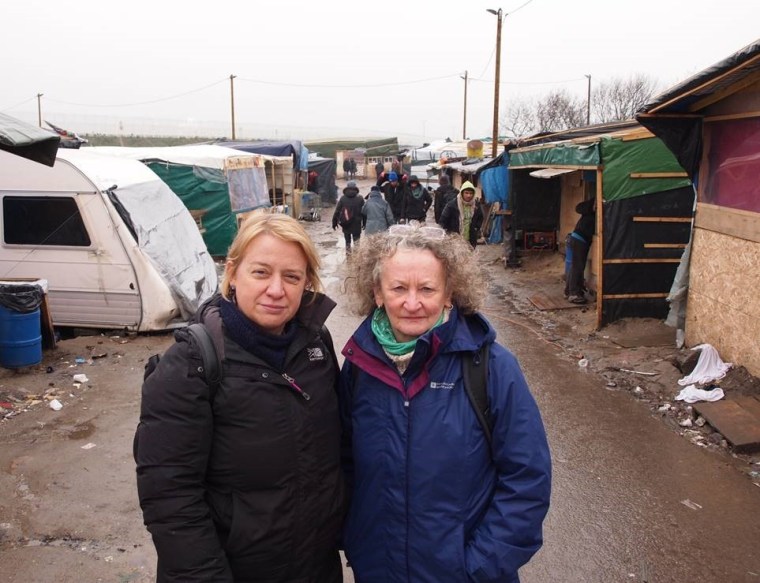

 Baroness Jones of Moulsecoomb