
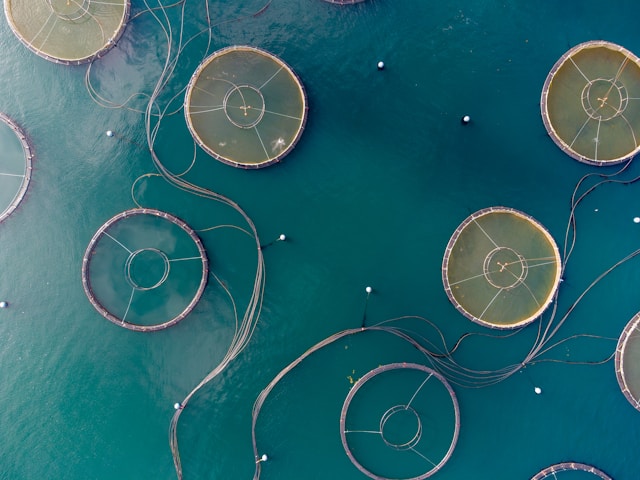
It is unconscionable that the Crown Estate should be profiting from the factory farming of salmon. It is clear that the current rules for the Crown Estate are not good; they are not good enough for the environment or for animal welfare, they are not working to protect to salmon populations from this toxic industry.
My speech to the House at Report stage of this bill and in response to Lord Forsyth’s salmon farming amendment which was successfully moved: On this day, 11 years, 2 hours and 20 minutes ago, I was introduced to this House, and I think that having signed this amazing amendment is a good way to celebrate those 11 years, 2 hours and 20 minutes.
I have spoken many times in this House about food and animal welfare and other connected issues, but I did not imagine that all this time later we would be talking about such a truly disgusting issue. I admit that I did not know all that much about it, but I know more now. I have seen the photographs of fish that have been eaten through by lice and the amount of debris that ends up on our seabed. It is unbelievable that we are allowing this.
Probably most of us eat salmon. A Lord told me earlier that listening to the Lord Forsyth, made him feel sick—and I am sure that was for the right reasons.
I spoke at a PETA meeting just before this—that is, People for the Ethical Treatment of Animals—and used salmon farming as an example of how far we still have to go to live up to our reputation as a country that cares for animals. I argue that this is a very damaging situation. I hope that the debates on the amendment, today and in Committee, are read, understood and acted upon by the Crown Estate commissioners and the salmon farming industry.
It is clear that the current rules for the Crown Estate are not good; they are not good enough for the environment or for animal welfare. Although I imagine that the leases are quite profitable for the Crown Estate, they are shameful. A spotlight has been shone on these harmful factory farms, where fish are riddled with sea lice, pumped full of antibiotics and fed with pellets crammed with other, smaller fish, causing damage to their populations. The salmon can have double-digit mortality rates. Plus, these fish farms are detrimental to our native salmon populations, which are already at risk of collapse.
There is also damage to the seabed around these farms and damage to the ocean’s ecosystems. We still know very little about the ocean—it is apocryphal that we know more about the surface of Mars than we do about the ocean—so we really should not be doing this to our seabed; we can imagine the amount of damage that tonnes of faeces, drugs, antibiotics and corpses can do to it. That is horrific.
It is unconscionable that the Crown Estate should be profiting from such a harmful industry. As the Minister accepted in response to this amendment in Committee, the existing laws and regulations clearly are not working to protect to salmon populations from this toxic industry. I hope he has thought more about that and can give an update today.
In his opening remarks on day 2 in Committee Lord Forsyth, called this a modest and uncontroversial amendment. Having looked more closely into this issue, I say that the amendment is absolutely necessary, and it would be unforgivable of the Government not to accept it.
Read the whole debate here
Amendment 4 moved by Lord Forsyth of Drumlean:
4: After Clause 2, insert the following new Clause—
“Salmon farms on the Crown Estate After section 3 of the Crown Estate Act 1961, insert—“3A Salmon farms on the Crown Estate(1) In carrying out their functions under this Act, the Commissioners must assess the—(a) environmental impact, and(b) animal welfare standards of salmon farms on the Crown Estate.(2) If the assessment under subsection (1) determines that a salmon farm—(a) is causing environmental damage, or(b) has significant animal welfare issues, then they must revoke the licence for the farm in question.(3) The Commissioners must assess the potential—(a) environmental impact, and(b) animal welfare standards of applications for licences for salmon farms on the Crown Estate.(4) If the assessment under subsection (3) determines that an application for a licence for a salmon farm—(a) may cause environmental damage, or(b) raises significant animal welfare concerns, then they must refuse the application.””

 Baroness Jones of Moulsecoomb