Police Cuts and bodyworn camera footage

According to a recent report, some videos showed that police officers were poor at communicating and lacked patience and de-escalation skills. Is it possible that the pressure on the police from 11 years of swingeing Tory cuts to their budgets and numbers is responsible for that sort of pressure? Their numbers are still not back to pre-Conservative Government levels of 11 years ago.

I have also submitted a written question:

“To ask HMG what assessment they have made of the need to update the College of Policing’s body worn camera guidance to (1) reduce officers’ discretion about its use, and (2) specifically discourage the practice of turning away from an incident to avoid recording wrongdoing by a fellow officer.”
Continue reading “Police Cuts and bodyworn camera footage”

Animal Welfare (Sentience) Bill – An Animal Sentience Committee

I have tabled nine amendments to the Bill to ensure that the animal sentience committee will be a properly functioning entity that can support a meaningful improvement in recognising the sentience of animals, and what that should mean for government policy.

My first amendment, Amendment 6, starts the process of improving the committee by explicitly stating its purpose. It seems a basic drafting failure that the purpose of the committee is not laid out. It seems rather strange to have it absent from the Bill, so here I am suggesting an option. If somebody wanted a public body to achieve a purpose, I think that they would specify that purpose in the enabling legislation. My concern is that, as the Bill is currently drafted, the animal sentience committee will not be able to achieve much. We have heard Lords use particular phrases about why animal sentience is not in our legislation: somebody said it just fell out and somebody else said it was dropped by accident. To me, that is a rewriting of history, because I remember that the Government took it out deliberately. Continue reading “Animal Welfare (Sentience) Bill – An Animal Sentience Committee”

Environment Bill committee Stage Day 5 – Waste water

This is one of the groups of amendments which really ought to be just swallowed wholesale by the Government. It has some excellent amendments in it.

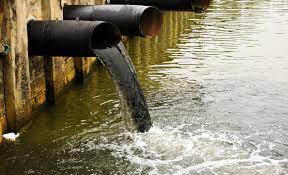
Amendment 161 emphasises the importance of nature-based solutions and other ways of separating our sewage from the clean water that falls on the surface as rain. It is absolutely absurd that we mix these two things together, instantly turning clean rainwater into raw sewage that, as far as we are concerned, is good for nothing. There are a great many nature-based solutions for treating sewage water. 

If I had to pick one amendment as the most crucial, it would have to be Amendment 166 tabled by the Duke of Wellington, which sets the essential target of zero discharges of untreated sewage into rivers. This is the level of ambition that we should be working towards as a matter of urgency.

Continue reading “Environment Bill committee Stage Day 5 – Waste water”

Environment Bill Committee Stage Day 5 – Air Pollution

Air pollution is a national health crisis: it costs us billions every year. It affects the old and the young. Several of us have mentioned Ella Kissi-Debrah, who lived next to a dirty, filthy road and died at nine years old because of her asthma. It is children who will have health problems all their lives because of living near polluted roads. This Bill is an ideal opportunity to fix this problem. We know what the solutions are, and they are here in these amendments.

My amendments seek to create a comprehensive system of targets, monitoring and funding to reduce air pollution levels to World Health Organization guideline levels. It is not possible to end this crisis without significant public spending. The Government must make the money available to local authorities to transform their communities and clean up their air.

Continue reading “Environment Bill Committee Stage Day 5 – Air Pollution”

Environment Bill Committee Stage Day 5 – Waste

We all know that the international waste economy is a nasty, polluting system, where the richest countries are using the poorest countries as dump sites—as giant landfill sites. Many people would be outraged to see that the recycling that they so carefully do is just baled up and dumped on poor countries and among poor communities, who then have to suffer the pollution that it causes.

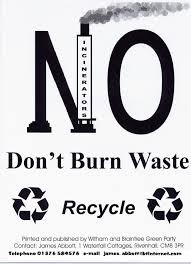
I am also concerned about the increasing capacity of UK incinerators. From what I can see, the planned capacity of these incinerators will soon far exceed the amount of waste that the UK produces. Many local authorities are, of course, tied into 25-year contracts with such businesses. This means they will be looking around for waste to burn.

Continue reading “Environment Bill Committee Stage Day 5 – Waste”

Environment Bill: Plastics

The cheapest immediate option is often one of the most expensive if you look over its lifetime: cheapest is not the best. We have to look at and understand the future repercussions of everything we do. Government and Parliament have vital roles in the transition away from mass plastic. Industry, PR and lobbyists will bleat on about industry-led transition, but this is just greenwashing most of the time. For as long as you can buy bananas wrapped in plastic, you can know that the industry claims are nonsense. Parliament has to legislate, and the Government have to lead. This is one of many issues where central government absolutely must get a grip on local authority recycling services and set basic minimum standards across the country.

Continue reading “Environment Bill: Plastics”

Environment Bill Committee Stage Day 4

The window for action is closing, not just of this Bill but of all our actions on the climate emergency. At the moment we are seeing endless examples of very unusual weather patterns, whether in Canada or over much of Africa. We have to understand that we have to act urgently. The fact that the OEP will have fewer resources than the preceding body is a matter of huge concern. It is obvious that we all think there are problems with this Bill. Continue reading “Environment Bill Committee Stage Day 4”

My amendment 104 to aid enforcement by OEP

Amendment 104 would enable penalties to be issued, taking into account a whole host of factors such as the gravity of the failure, any intention of negligence, and previous failures by the authority. The inclusion of the principles of effectiveness and proportionality makes my amendment wholly reasonable, and is necessary for ensuring that the ambition in this Bill is not trashed by poorly governed public authorities.

Amendment 104 would use these penalties to fund the NHS and local authorities to reduce the harms of air pollution and treat the associated illnesses, which very much affect children as well as adults. Continue reading “My amendment 104 to aid enforcement by OEP”

My amendment 109 addressing governance gaps in environmental law

Several requirements for the Secretary of State to report information to the European Commission in relation to environmental law have been lost because of the UK’s departure from the EU and the subsequent adoption of new statutory instruments. This poses a serious threat to the effective application of environmental law in the UK and the Government’s ability to achieve their stated aim and manifesto promise of leaving the environment in a better state than that in which it was found. The reporting of information relating to environmental law is absolutely vital to ensure transparency and accountability in environmental policy-making and ensure that government and stakeholders can identify and address environmental impacts. Continuity over time in the information being recorded and reported can also help to reveal trends and increase transparency.

My Amendment 109 would introduce a new clause into the Bill that is intended to address some extensive governance gaps in environmental law that have arisen because of the UK’s departure from the EU. Continue reading “My amendment 109 addressing governance gaps in environmental law”

Building to fail

We cannot solve Britain’s housing crisis by building shoddy homes in dangerous places, We need high-quality, safe, energy-efficient homes situated in ecologically sound places. If the Government live up to their stated environmental ambitions or have the slightest bit of common sense, the way forward is obvious: we simply do not build on flood plains. It is a national problem that we cannot fix once these houses are built, because they will not be safe, dry or good to live in and it will be impossible to insure them. Once again, the Government are building for failure, and I do not understand why any Government would do that. Continue reading “Building to fail”