
There are so many issues in the gracious Speech that I would like to tackle. I would like to talk about nuclear safeguards, agriculture and fisheries and the folly of HS2. However, I will try to contain my enthusiasm—or my fury—and talk about only two or possibly three issues. Continue reading “My response to Queen’s speech”
Category: Civil liberties
Government, the police and intelligence services are too easily given sweeping powers that they too often abuse
Jenny works with campaigners to defend our civil liberties
Read on for her latest posts on this topic
When the NHS catches a computer bug are security services to blame?
There is no doubt that the delays and disruption caused by the NHS computer virus could have been avoided. The government could have used a fraction of the multi-billion security budget to enable hospital trusts to update ageing software. However, instead of being focused on designing out crime as they promised to do, western security services are doing the opposite. The US government and our own, are pressuring companies like Microsoft and others to create ‘backdoors’ which open up our privacy and security to attack if they are leaked.
Continue reading “When the NHS catches a computer bug are security services to blame?”
Are the police spying on the witnesses at the inquiry about the police spying on people?
It seems obvious to me that the police shouldn’t be spying on people who are key witnesses at the Pitchford inquiry into police spying. Those witnesses are gathering together a history of activism and campaigning to present their evidence, via a Barrister, to the inquiry judge. You would think it would be easy to get a reassurance from the government that these witnesses are not being spied upon by the police, as the police would clearly gain an advantage from knowing what those witnesses have prepared, but no, it is not.

Human Rights Day Reception
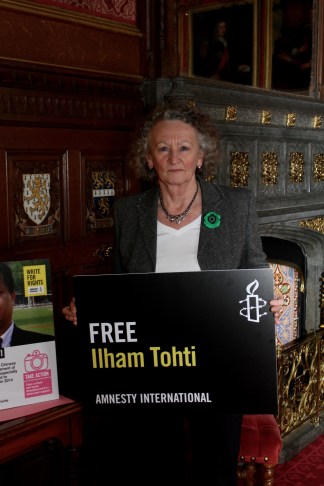
On 10th December Jenny attended a reception in Speaker’s House hosted by Amnesty International to mark International Human Rights Day. The event was a great success with Amnesty activists, school groups and parliamentarians all taking part in the Write for Rights campaign, writing letters and other messages to individuals at risk around the world. As a result of the event, Ann Clwyd MP has secured an adjournment debate on Tuesday 13th December where she will be referring to some of the specific cases from the Write for Rights campaign as well as the wider human rights contexts in some of those countries.
Do the police work for us, or for the Fracking corporations?
Fracking is being imposed on people by a government that doesn’t care about local democracy or climate change. This has led to legal challenges and protests as local people try to resist, with the police giving the impression that they are working on behalf of the fracking companies, without understanding their crucial role in supporting peaceful protest. It also appears that the police are using all the tools of anti-terrorism legislation to monitor and repress these protests. It is the biggest example we have of how the measures supposedly put in place to protect us are being used to protect the profits of the corporations from actions by ‘us’, the people.
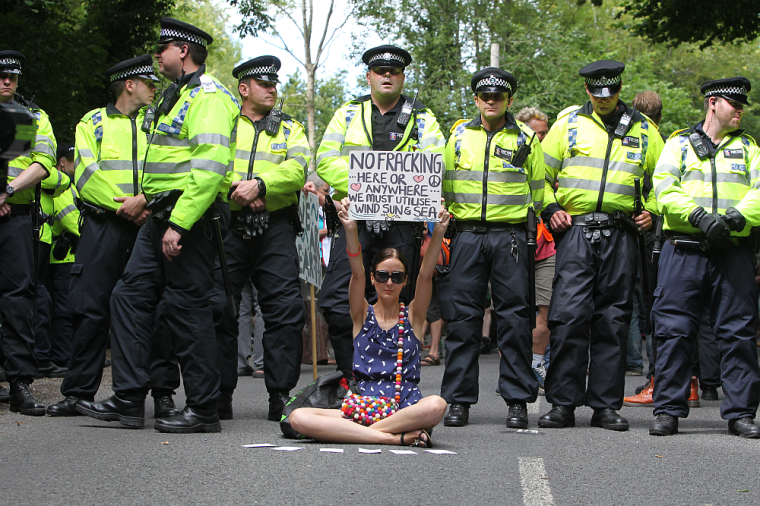
Image by Randi Sokoloff
Continue reading “Do the police work for us, or for the Fracking corporations?”
Jenny protests at the Lords acceptance of the Investigatory Powers Bill
This is a quote from Edward Snowden that Jenny yesterday read out in the Lords as the Labour Party allowed the Government to pass the third reading of Investigatory Powers Bill:

Edward Snowden is a former NSA contractor and whistleblower
There were boos when she declared the source of the speech and she finished by saying she believed the House would regret it’s failure to stop the Bill.
Jenny speaks out against the detention of pregnant women
Jenny initiated an hours debate (Question for Short Debate) on the detention of pregnant women. The debate takes place today in Grand Committee. The government is failing to tell support groups how many pregnant women are currently being detained. Jenny believes that NO pregnant women should be detained. The terrible stress, anxiety and hardship associated with detainment can only injure mothers and unborn children and should not be tolerated by a civilised society. Here she explains her views
Investigatory Powers Bill incredibly repressive – the end of privacy in the UK?
Jenny blogs outside the House of Lords in this YouTube link
Blacklisting question
I’m asking the \Government this question in the Lords today:
“…what plans do they have to strengthen provisions in the Investigatory Powers Bill to increase the protection of data relating to trade union and political activities?”
Blacklisting destroys lives because employers can use it to punish people who stand up to them. Major employers can plunge families into poverty by stopping people working their chosen trade in the mainstream of a particular industry. In the construction industry, it was used to destroy the ability of working people to organise in defence of a safe working environment, which for several decades has been a matter of life and death.
I’m very concerned that the police and the state colluded in this horrible practice by sharing information with blacklisting companies. We know that undercover officers spied on trade unionists and the Pitchford Inquiry into undercover policing must assess whether this information was used by blacklisting companies. The Investigatory Powers Bill gives the police expanded powers to potentially do much worse damage to people’s lives in the future, but I don’t see the strong safeguards in place to stop systematic information sharing people’s personal information with private companies.
John McDonnell MP has been very involved in helping to expose the links between blacklisting companies and the state. The ex-director of Liberty, Shami Chakrabarti, has become a Labour peer. I hope that this will translate into the Labour Party doing everything it can to amend and oppose the appalling IP Bill in the Lords.

Prevent is not fit for purpose
Responding to the comments by David Anderson QC, the outgoing chair of the Government’s independent reviewer of terrorism legislation,that Prevent should be reviewed and overhauled, Baroness Jenny Jones said:
“The fact that many people, especially within the Muslim community, are refusing to cooperate with Prevent is clearly damaging its effectiveness and that alone is a good reason for a review. Continue reading “Prevent is not fit for purpose”
 Baroness Jones of Moulsecoomb