I congratulate Lord Hunt, on bringing this debate. I also want to apologise to him, because I am always surprised by how passionately he talks about climate change. That is on me. Sorry about that. It is wonderful to listen to.
I have met the new Prime Minister a few times and I have a lovely photograph on my phone of him and me at Glastonbury last year. I sort of thought we could work together, but the more I see what is happening and going through, the more I am beginning to think it will not be possible. It seems as if the slow-moving, stagnant mechanism of government has got its claws into him and he is not thinking very creatively any more. I hope I am wrong. We shall see over the next few weeks and months.
I want to mention three things that are crucial for the future of this Labour Government, which will all help society as well as the environment. We have to accept that climate chaos is the new normal. Thousands of people died this summer in the heat and that is going to keep happening if we are not very careful about adapting to it. People arriving at A&E with heat exhaustion and so on is also going to be the new normal. This Government must not make it worse by going ahead with the Jackdaw gas field and Rosebank oil field. That is folly. What they should be doing is what they have just scrapped—putting solar panels on every supermarket car park and every roof, everywhere they possibly can. That is the sort of thing they ought to be doing to be creative about combating climate change. We need to adapt to hot summers. A tiny measure would be to put shutters on all the windows, as in France. I have lots of ideas and I am quite happy to chat them through.
The second thing is to help save the NHS, not by privatising it but by remembering that prevention is better than cure. If you cut pollution, you cut the number of people going into hospital. You cut the number of children whose lungs are so stunted by pollution that they have lifelong problems with their breathing. Well done to Sadiq Khan here in London, where he has massively cut air pollution. We should have low emission zones across the whole country, as they do in mainland Europe.
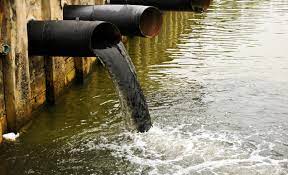
Thirdly, one big way to reduce pollution would be to take the water companies into public ownership. The Prime Minister mentioned those words yesterday. I would like to think he means renationalisation, but I do not know any more, because he keeps changing his mind. I have stopped paying the sewage part of my bill. I asked Thames Water how much that part was. I was happy to pay for the water, obviously, but I was not prepared to pay for the sewage it was dumping in the Thames. It told me that it did not work out the bill like that, so at the moment I am not paying my bill. We will see if it takes me to court before it goes bankrupt. We stopped the poll tax with a campaign of non-payment. Civil disobedience is possibly the only way to fight companies such as the water companies which are operating in a way that is a disbenefit to the whole of society. I say to the Government that the Green Party always has loads of very practical ideas and I am very happy to share them.
Hansard record here: Government Political Priorities and Legislative Agenda – Hansard – UK Parliament