My Oral Question on By-catch

Today I asked HMG when they intend to publish the Bycatch Risk Prioritisation Framework

The Parliamentary Under-Secretary of State, Department for Environment, Food and Rural Affairs (Baroness Hayman of Ullock) replied for HMG: A report on the bycatch risk prioritisation framework will be published by the end of the year. The framework will identify where we expect bycatch risks to be greatest across the UK. This will help us to target monitoring and mitigation efforts on the species, areas, fishing gears and fisheries that need the most attention. The report will provide a snapshot of current understanding, while the framework will be updated over time.

My follow up question:

I thank the Minister for her Answer. At the moment, every year, fishing boats are catching—this is an underestimate because not all boats are monitored—at least 10,000 seabirds, 1,000 cetaceans such as harbour porpoises, common dolphins, humpback whales and minke whales, and around 500 seals. That is absolutely appalling. Will the Minister take that back to this new Government, who want to do the right thing? When will the Government publish bycatch action plans for seabirds, cetaceans, seals and protected fish species? When will the Government require remote electronic monitoring on all fishing boats in UK waters, including those under 10 metres in length?

Hansard record here

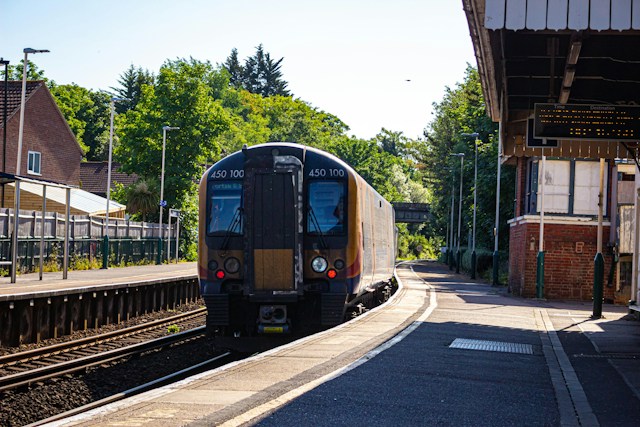
Railways Bill Second Reading

I do not say this often, but I welcome the Bill. The Green Party has long argued that our railways should be run as a public service and not for private profit. After decades of failed fragmentation, spiralling costs and confusing accountability, bringing the railway back under public leadership is important and overdue. The Bill is, therefore, a step in the right direction.

If we are creating Great British Railways, we must create a railway that is genuinely great: one that is affordable, accessible, integrated and capable of helping us meet the defining challenge of our age, which is the climate and nature crisis. At present, the Bill does notachieve that. It lacks ambition. For example, Great British Railways will have numerous duties, so why does the Bill not contain a clear duty to increase passenger numbers?

I welcome the target for shifting freight from lorries on to trains, but why is there no equivalent ambition to encourage more people out of their cars and on to trains? To do that, we must make train travel cheap and easy. For millions of people, the biggest barrier to travelling by rail is not whether a train exists but whether they can afford the ticket. Affordable fares are perhaps the single most effective tool available to increase passenger numbers, tackle inequality and reduce car dependence. Yet the Bill contains no explicit duty to promote affordable fares, and changes to the licensing arrangements of Great British Railways could see fares rising as there is less focus on public duties.

There seems to be even less ambition to create one system that covers the whole journey someone might take. As the Minister knows well, this works in Greater London, where TfL runs the London Overground under the mayor’s control. Manchester is moving that way, but what about democratic control over integrated transport for the rest of the cities and regions? People do not think in terms of operators or transport modes; they simply want one journey. Whether someone is connecting from a local bus, a tram, a cycle route or a ferry, the system should feel seamless. Integration should be one of the central purposes of Great British Railways, creating a public transport network where different modes work together rather than competing with one another. I hope that the Government will clarify how the railway will become genuinely integrated with other forms of public transport.

Rail is already one of the lowest-carbon forms of transport. We should be supporting every passenger to choose rail over driving or domestic flying. If we are to meet our legally binding climate targets, modal shift cannot simply be left in policy papers; it should be a statutory objective of the organisation that is responsible for running the railway. Staggeringly, environmental responsibilities appear only fleetingly in the Bill. There is little recognition that our railway must become climate resilient as extreme weather becomes more frequent or that it should contribute to restoring nature alongside the lines it manages. Some 10% of all train services were cancelled or severely delayed in the most recent heatwave in Britain. Last week, I spent six hours getting home instead of three, and I felt lucky to get home at all.

Great British Railways should have a clear public mission that recognises its contribution not only to transport but to our economy, our environment and our wider society. Passengers deserve the reassurance that a publicly owned railway will be judged not simply on financial performance but on whether it provides affordable access to work, education, leisure and family life. Profitable routes should be able to support socially essential services in rural and underserved communities, where success is measured not only in ticket revenue but in reducing isolation, supporting local economies and giving people a genuine alternative to cars. High ticket prices mean empty seats.

Equally important is protecting the workforce that keeps our railways running. I welcome the reassurances that the Government have given regarding the future of the Railways Pension Scheme, providing valuable certainty for thousands of rail workers. The future of Great British Railways will depend as much on the people who run it as it will on the infrastructure they manage.

Of course, the Bill misses one of the biggest opportunities of all: setting Britain on the path towards a fully electrified railway. Britain has spent decades pursuing a stop-start approach to electrifying its rail network. Only 39% or thereabouts of our railway is electrified, which is is well behind many comparable countries. We know what needs to happen. The Climate Change Committee has made it clear that substantially more of the network will need to be electrified if we are to decarbonise rail and meet our climate obligations. Yet the Bill is silent on this.

Finally, I hope that the Government will look carefully at how passengers themselves are represented. A publicly owned railway that fails to listen to the public will have missed the point entirely. Public ownership should not simply change who owns the railway; it should change for whom the railway works. Passengers, disabled people, local communities, rail workers, devolved Governments and regional authorities should all have meaningful opportunities to shape services, investment priorities and future strategies. Improving accessibility will be a huge benefit for our ageing population.

We also need more clarity on how mayoral, local and combined authorities will be able to control investment plans and services. The Green Party has long argued that rail should be viewed not simply as a transport system but as essential national infrastructure for delivering economic opportunity, social justice and climate action. Public ownership is not the destination; it is the foundation. The Bill moves us away from the disastrous experiment of fragmented privatisation—for that, it deserves support —but we should not settle for a railway that merely functions better than before. We should build one that actively reduces carbon emissions, restores nature, connects communities, integrates public transport, makes travel affordable and expands opportunity across every part of the country. Those ambitions really must be written into the Bill itself.

I welcome the Bill’s Second Reading and hope that, during its passage through this House, we can strengthen it so that Great British Railways truly lives up to its name as a railway that is run in the public interest, serving people, communities and the planet for generations to come.

Hansard record here: Railways Bill – Hansard – UK Parliament

Marine Protected Areas

In the UK, there are 377 marine protected areas, and, of those, only 38 ban the destructive practice of bottom trawling. What makes the Government think that they can do any better in the Sargasso Sea?

Baroness Chapman of Darlington replied to HMG: At risk of stepping on the toes of my noble and good friend Lady Hayman, the Defra Minister, I believe that Defra is either consulting on or has just concluded a consultation on this issue. The Government will be responding very shortly.

Link to the debate here: International Marine Protected Area: Sargasso Sea – Hansard – UK Parliament

Sporting Events Bill Committee Stage day 2

Schedule 5: Transport provisions

Amendment 59 moved by Baroness Jones of Moulsecoomb

Baroness Jones of Moulsecoomb

59: Schedule 5, page 42, line 3, at end insert—

“(2A) A plan prepared under this Schedule must—(a) have regard to sustainable modes of transport, including public transport, walking and cycling,(b) aim to minimise greenhouse gas emissions associated with travel to and from sporting events, and(c) include arrangements for admission tickets to a sporting event to confer entitlement to travel on specified public transport services serving the event.”

Member’s explanatory statement: This amendment seeks to ensure that transport plans for sporting events promote public transport and other sustainable modes of travel and seek to minimise transport-related emissions, and include integrated ticketing arrangements allowing spectators to travel on public transport using their event tickets.

My speech to the House: I am so sorry I was not at Second Reading. This is very much the sort of thing that I feel very strongly about. My three amendments in this group are on three different topics. One is transport, one is sustainability reporting and the third is on climate duty, all of which I feel very strongly about. I am going to find it hard not to bring these back if there is not progress.

My speech to the House: I am so sorry I was not at Second Reading. This is very much the sort of thing that I feel very strongly about. My three amendments in this group are on three different topics. One is transport, one is sustainability reporting and the third is on climate duty, all of which I feel very strongly about. I am going to find it hard not to bring these back if there is not progress.

It is extraordinary that this week, the hottest June day ever for the UK has been measured in Surrey. We are hotter here than California’s Death Valley, and that is saying something. We really are not weatherproofed and we are not heat-proofed. We are very lucky in this Chamber. I sat in Portcullis House at 9 am this morning: it was baking. We stewed in there. Of course, a lot of people do not have the advantage of air conditioning like this in their offices and in their public places.

I find it extraordinary that, in a week where parts of Britain have once again seen record temperatures, when red warnings have been issued because of extreme heat, and when climate change is impossible to ignore, we are debating a Bill that contains detailed provisions on transport planning for major sporting events but does not mention climate impact once.

Schedule 5 goes into considerable detail about transport plans. It tells organisers what they should consider, how they should co-ordinate and what arrangements should be put in place. Yet there is absolutely nothing about the environmental impact of those transport arrangements. For major sporting events, transport is often the biggest source of emissions. At the Birmingham Commonwealth Games, spectator travel accounted for more than half of the event’s carbon footprint. At Euro 2024, fan travel accounted for almost 80% of emissions. We need to be serious about reducing the environmental impact of major sporting events, and transport is the obvious place to start.

This amendment has two components. The first is that transport plans should have regard to sustainable travel options,

“including public transport, walking and cycling”,

and should seek to “minimise greenhouse gas emissions”. I am sure the Minister is well aware of all the work that happened in Ken Livingstone’s period at the London Assembly: we achieved a lot. The Government already tell us that rail is one of the greenest ways to travel. The Government’s own active travel investment strategy tells us that walking and cycling help to reduce greenhouse gas emissions. So we need to tell event organisers to take account of what the Government already recognise to be the lower-carbon options. Parliament has gone much further before, such as in the London Olympics, the majority of which was planned in the period of Ken Livingstone in London, and I am suggesting that we can do that in my later Amendment 88.

The second element concerns integrated ticketing. If we want people to leave their cars at home, we need to make the alternative the easy option for them. Again, we have a very recent and very successful example. Every match ticket for Euro 2024 came with a 36-hour public transport pass built into the ticket price. The result was a success, because more than 80% of fans travelled to venues by public transport and fewer than 5% travelled by car, and hundreds ofthousands of rail journeys were made between host cities. This was achieved by making the sustainable choice the convenient choice. Integrated ticketing also benefits spectators. It is easier, cuts costs, and helps avoid congestion around venues. It improves the experience of fans while reducing emissions.

That seems a rare example of a policy that is good for the climate, organisers and the public. If there were ever an example of why we need to be adding in these amendments and preparing for climate resilience travel, it is today, when trains are cancelled due to heat and people are being asked not to travel. The Climate Change Committee has warned that climate risk will increasingly affect the operation of major events. When tens of thousands of people are trying to reach a venue within a narrow timeframe, those risks become particularly acute. What would it look like if we had today’s weather on the day of the Euro 2028 final?

Asking those preparing transport plans to think about sustainability and resilience is absolutely vital. The Government’s own impact assessment argues that legislation is necessary because voluntary arrangements alone do not provide sufficient certainty and consistency. If legislation is needed to ensure transport plans work effectively, why should climate impacts and climate resilience be left entirely to chance? Given the climate challenges we face and the examples of best practice we have already seen across Europe, that seems the very least we can expect.

On Amendment 87, on sustainability reporting, we hear the same language every time a major sporting event is bid for, such as world-leading sustainability, greenest games ever and low-carbon legacy, and it all sounds incredibly impressive at the time. But I get a bit fed up with the gap between the promises made and what actually happens. The Paris Olympics, for example, set itself up as the lowest-carbon games yet. In some respects, it did better than previous Olympics: emissions were lower than London or Rio, largely because they reused venues, cut down on new construction and made some sensible choices about energy and materials. But when you look a bit closer, the picture gets more complicated. Transport still dominated emissions; international travel still drove a huge carbon footprint; and, in the end, we are talking about millions of tonnes of CO2. Yes, there was progress, but it also showed something else very clearly: without proper reporting, it becomes very hard to know what was genuinely achieved, what was just assumed and what was simply good marketing.

That is the point of this amendment. We should not be relying on glossy bid documents and press releases to tell us whether promises have been kept. If we are serious about sustainability being part of these events, then we need to be just as serious about checking afterwards whether it actually happened. Right now, too often, the pattern is this: big promises at the bidding stage; celebration at the event; and very little scrutiny afterwards. This amendment says that, if you make environmental commitments before the event, you report on them afterwards—accurately, obviously—so that we can see what was delivered and was not.

Of course, there are already sustainability requirements for major sporting events, but they are patchy and inconsistent. Some bids are strong, while others arevague; some report properly, while others barely report at all. That makes it very hard to know what is actually being delivered. We need something more uniform: clear expectations that commitments are measured properly and reported before and after the event. Without that consistency, we are not tracking progress; we are just collecting promises—and, quite frankly, people are getting tired of empty promises.

Amendment 88 is on climate duty. We have had this kind of duty at past events—for example, in the London Olympics framework, where sustainability and wider environmental considerations were explicitly built into delivery. What we are seeing here in the Bill is a step backwards from that approach, just at the point when climate risks are more immediate, not less. We are told, including in the Government’s forthcoming major events strategy, that major events will continue to drive economic growth, enhance the UK’s soft power across the globe and strengthen social cohesion. Of course, they can do those things, but they cannot only be about that, and they certainly cannot deliver those benefits at the expense of our climate and environmental responsibility.

At the moment, the Bill is built around delivery, organisation and facilitation, but it is silent on sustainability. We need to put in place something that should already be clear here: a clear duty that, when exercising functions under the Bill, we must have regard to greenhouse gas emissions, sustainable transport, waste reduction and the UK’s climate and environmental targets. We can continue with a system where climate is assumed to be somebody else’s problem, or we can put in place a basic duty that ensures it is properly considered every time decisions are made on these events. I beg to move.

I closed the debate saying: I thank all the Lords who spoke. On the point from Lord Harlech, I am an Arsenal supporter but I do not take responsibility for every single Arsenal supporter. It is appalling that there was so much waste. I thought he showed great discretion in not mentioning that Islington Council is a Labour council—that was very kind and sweet of him. Sadly, the Greens are only in opposition there, so perhaps by 2028 we might have more sway.

Lord Whitty, tabled his Amendment 95 after the noble Baroness, Lady Bennett, tabled hers. Had I seen his, I would probably have just supported it, but this has contributed to a debate, so it has been quite useful in that way.

Lord Moynihan, made some very kind comments. After his tabling that regret amendment yesterday on the Climate Change Act, and winning the vote, I really thought I would never speak to him again. But obviously, his kind comments have completely changed my mind. It is a pleasure to agree.

On the difference between the two Mayors of London, Ken Livingstone and Boris, I would just like to say that Ken did all the back-breaking work for the planning and in carrying it through. As for Boris Johnson, to cut any further emissions he put potted plants along the major roads, which was a fairly inadequate way of dealing with carbon emissions. But, you know—that was Boris.

It was fascinating to hear from Lord Mawson, about these different things that happened during the Olympics. I felt quite heavily involved, but I had completely forgotten about the water situation, and all the pre-planning as well, which I did not know anything about. That was all fascinating.

In response to Lord Parkinson, I hope the Conservative Opposition are going to be really heartened by the fact that there was so much support for putting climate change issues into the Bill. Given that we have had support from all around the Chamber, I hope we can do something much more progressive.

Lord Addington, said that really, this is an obvious thing to do. The Minister knows I have huge respect for her and for her work here, but also at the London Assembly. But the Government have a problem here. With so much unanimity on this issue, the Government have to give way a little bit on this—a bit more than they perhaps want to.

Quite honestly, something that annoys me again and again with this Labour Government is that they talk about climate change, but they just do not get it. They do not see how to apply climate change measures to all the legislation they are putting through. The fact that it was completely left out, especially the transport sustainability issues, I just find astonishing. So, I will be pushing on this. The Government have to be seen to be aware not only of climate change but of the measures we can bring in to improve it.

I do not want to overstate the case, but we are responsible for future generations here. This really matters. I would love to be included in the discussions—although the Minister might not want me there. But if I can be, that would be great. I beg leave to withdraw the amendment.

Amendment 59 withdrawn.

Amendment 70 (to Amendment 69) moved by Baroness Jones of Moulsecoomb

70: After subsection (1A)(b) insert—

“(c) measures to improve the resilience of sporting infrastructure against the impacts of climate change, including flooding, extreme weather and heat.”

Member’s explanatory statement: This amendment adds climate resilience to the list of considerations to be made by national authorities providing financial assistance to sporting events.

My speech to the House: I fully support Amendment 69 in the name of Lord Addington. Obviously, major sporting events generate significant commercial benefits, but we have to ask what their legacy will be or could be. Too often we celebrate the spectacle, the television audiences and the economic boost, but the local clubs, pitches and volunteers, which sustain sport every week of the year, may see little benefit.

Amendment 69 seeks to address that by creating an expectation that those who benefit from major sporting events should also invest in grass-roots sport, community facilities and participation. After all, elite sport does not emerge from nowhere. Every international player and every Olympian starts somewhere. They start on local pitches, in community halls, in amateur clubs and in local swimming pools, with volunteer coaches giving up evenings and weekends. In many places, the local sports club is one of the few remaining community institutions where people of different ages and backgrounds come together regularly. So I warmly support the principle that grass-roots foundations, on which all sport ultimately depends, should be strengthened.

My Amendment 70 takes that further to add that the climate resilience for grass-roots sport should be included too. This is a month when I was locked out of my office because of potential flooding and, of course, we now have this incredible heatwave, so I argue that this amendment seems particularly relevant.

When we talk about investing in grass-roots facilities, we must also talk about protecting them. Across the country, grass-roots sport is already experiencing the effects of climate change. Football matches are cancelled because pitches are waterlogged, clubs face increasing repair costs after flooding and storms, and facilities are damaged by extreme weather. Heatwaves are clearly creating new challenges for us all, and these are real present-day problems for sports up and down the country.

Estimates suggest that between 120,000 and 150,000 grass-roots football matches are cancelled each season because pitches are unplayable due to rain and flooding. In parts of the country, pitches are already losing weeks of playable time every year because of changing weather patterns, and every cancelled match means lost revenue for clubs, disruption for volunteers and fewer opportunities for participation. Over time, of course, it threatens the viability of facilities that communities depend on.

The irony is that we can spend money improving a clubhouse, upgrading a pitch or expanding facilities only to find that those investments are increasingly vulnerable if resilience is not built in from the start. If public money or event-related investment is helping to support a community sports facility then surely it makes sense to ensure that the facility remains usable for years to come.

Hansard record here: Sporting Events Bill [HL] – Hansard – UK Parliament

Combating Atrocity Crimes, Crimes Against Humanity and Genocide

My Lords, in the early 1990s, I worked in Tigray, northern Ethiopia, at Axum, which is more or less on the southern border with Eritrea. I was there for a few months as an archaeologist. Before I went, I did hardly any research about the area. My life at the time was travelling around the near East to different digs, and I had got a bit blasé about new countries, new currencies and new languages.

We were lodged in Axum in a very basic but secure hotel, a bit like a Roman house—three sides and well fenced with a big gate on the fourth side. On such digs, one worked with local people who also dig and while we worked, we chatted. The locals came across as subdued, very thin and did not talk much about their lives past or present. Much later, I realised, of course, that they were suffering from quite severe trauma.

The food at the hotel was very basic. After long days working at 6,000 feet—at one point, I had 12 small trenches open on a hillside, which meant quite a lot of exercise—we came back to almost always the same meal: boiled goat, pasta and tinned tomato sauce. I was vegetarian at the time but as I lost weight quite quickly, I began to eat the goat meat as well. Our hosts would go to the market, buy three little goats at a time and let them graze tethered together in the grass inside the hotel. Then, one day, there would just be two grazing and fresh, boiled goat on the menu. The lack of vegetables and fruit was not because the local people were not good at farming and growing but as a result of past burning of crops and destruction of trees and bushes—plus, of course, the denying of food from international organisations.

This was all caused by the conflict of a few previous years. For example, in 1989, there was an advance southward by the rebel forces of the Ethiopian People’s Revolutionary Democratic Front, or EPRDF, a coalition led by the Tigray People’s Liberation Front—the TPLF. The rebels thrust to within 100 miles of Addis Ababa and to fight the TPLF, the authorities forcibly conscripted tens of thousands of young men and boys, some as young as 13 or 14, in violation of international law and Ethiopian regulations on military service.

A year later, in 1990, there was a major defeat with the loss of the port town, Massawa—on the Red Sea coast to the north of Eritrea—to the Eritrean People’s Liberation Front, the EPLF. Is everybody keeping up? During the fighting, 200 civilians were killed, many of them kept hostage as human shields by retreating government forces. Massawa was repeatedly bombed by government aircraft using napalm or phosphorus bombs, high explosives and cluster bombs. Main targets were places where civilian refugees were encamped outside the town.

About 25,000 tonnes of food donated by international humanitarian organisations were burned and the Government prevented a ship carrying relief supplies docking by threatening to attack it. On numerous occasions, soldiers in garrison towns near the front line arbitrarily opened fire on local residents, including women and children. Local women were forced to work as cooks, cleaners and prostitutes with the soldiers.

A year later, in 1991, there were killings of demonstrators who were protesting against the new EPRDF Government. A major humanitarian crisis developed as a result of the war, which led to a widespread famine—hence the food we were eating as archaeologists, but which was probably a lot better than what the local people were managing to eat. It also inflicted immense economic damage on the region, with the cost of rebuilding alone estimated to be tens of billions of pounds. But it was not a genocide, apparently.

Then, nearly three decades later, in 2020-22, there was an acknowledged genocide committed in Tigray. Estimates suggest 162,000 to 600,000 civilians were killed, with over 120,000 women raped and more than 6 million Tigrayans affected by violence, displacement and famine. More than 2.2 million people were displaced, and the destruction of healthcare and social infrastructure left the region in crisis, with maternal mortality rates quadrupling.

This is a deeply traumatised country. In 2024, the Australian Greens expressed deep concern over the continuing humanitarian crisis in Tigray, citing the New Lines Institute genocide report. They believe the actions of Ethiopian and Eritrean forces may constitute genocide and urge the Australian Government to support accountability. I thank the noble Lord, Lord Alton, for bringing this debate: we here must do the same, and I hope the Government listen to our debate.

I would also like to mention the Armenian genocide of 1915 to 1916. Of the around 1.5 million Armenians who lived in the Ottoman Empire in 1915, at least 664,000 and possibly as many as 1.2 million were killed in massacres or individual killings, or died from systematic ill-treatment, exposure and starvation.

As of today, the UK does not officially recognise that genocide, as it is

“not for governments to decide whether genocide has been committed as this is a complex legal question”.

However, it

“recognises the terrible suffering that was inflicted on Armenians living in the Ottoman Empire and acknowledges the strength of feeling regarding this terrible episode of history”.

Well, that is good, then, that they recognise the suffering.

Of course, there is the genocide in Gaza, which other noble Lords have mentioned. There are recommendations for the Government from ActionAid which would end our Government’s complicity and uphold their obligations under international law. They should act urgently, consistently and concretely to prevent and respond to atrocity crimes, crimes against humanity and genocide.

To me, as someone who does not talk about this issue a lot—although I talk about human rights a lot—it seems a rather haphazard process as to when a humanitarian disaster becomes an atrocity, a massacre or a genocide. My view is that the UK must upholdinternational law consistently, support accountability wherever violations occur, and ensure it is never complicit in the crimes it claims to oppose. It really does not look like that at the moment.

Link to the debate here: Combating Atrocity Crimes, Crimes Against Humanity and – Hansard – UK Parliament

Civil Aviation (Consumer Protection and Regulatory Reform) Bill Second Reading

I welcome the Government’s attempt to strengthen airline passengers’ rights, especially with the worries about aviation fuel due to Israel and Trump launching a disastrous and illegal war on Iran. I am happy to support the Civil Aviation Authority being given additional enforcement powers to ensure that airlines comply with consumer laws. However, I am not so keen on legislation that makes it easier to expand airports, especially if that increases noise and pollution for people living in the immediate area or along the flight path. It is extremely bad for human health and well-being.

Climate Change: Government Action

My Lords, the King’s Speech did mention climate change. He said that his Government would be a “leading advocate” in the fight against climate change, yet there is not a single policy specifically about nature or the environment in the whole speech, in the whole government agenda. Given that and given that nature and the environment underpin our economic security, our food security and our productivity, when are the Government going to take this whole issue seriously and produce some policies where nature is supported?

Lord Whitehead replied for HMG:

The noble Baroness will know what the Government have been doing to take on the recent environment and nature plan. That is now at the heart of the clean power 2030 drive to ensure that our power systems are compatible with and supportive of nature and the environment rather than destructive of them. That is a commitment that the Government have. While it is true that this King’s Speech has not put forward specific measures relating to this, it is nevertheless interwoven in everything that the Government are doing as far as climate change and low carbon are concerned.

Climate Change: Government Action – Hansard – UK Parliament