Government by-pass MPs on new policing laws

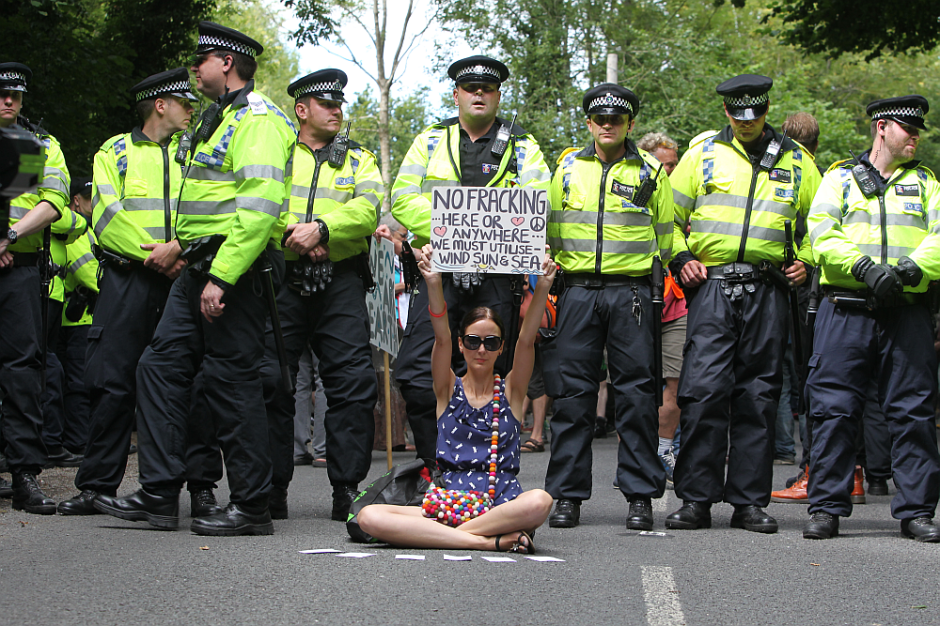
Pages of new amendments to the Police, Crime and Sentencing Bill have been submitted by the government as the legislation is half way through the Lords Committee stage. The new laws target “locking-on” and other forms of nonviolent protest, as well as giving police officers the ability to stop and search without suspicion.

Continue reading “Government by-pass MPs on new policing laws”

Why I wear both the red and white poppy

Remembrance Day is about joining together to respect the dead

I wear a red poppy, but I wear a white one too. One of the defining features of modern wars is the vast numbers of civilians who are killed as well. Over 140,000 civilians are estimated to have died in the Iraq war or its aftermath. The white poppy is one way of remembering them. From those thousands in Iraq to the Londoners who died in the blitz and the citizens of Nagasaki and Hiroshima, the white poppy speaks for them. When the red wreaths are laid at the cenotaph and at numerous memorials around the country, would a wreath of white poppies be out of place? Should we remember all of the dead, or only those in uniforms?

I feel that the dead from the numerous conflicts and wars need to be remembered. The reasons why we remember them will vary. For some, it is the loss of relatives or friends. For others, it is the result of unpopular political decisions. Whatever the reason, the dead should not be forgotten.

The white poppy was first introduced by the Women’s Co-operative Guild in 1933 and is now sold by the Peace Pledge Union. Their motto is “War is a crime against humanity. I renounce war, and am therefore determined not to support any kind of war. I am also determined to work for the removal of all causes of war.”

That belief; that we should not only remember the dead but also think about the reasons they died, has always been surrounded by controversy. Some women lost their jobs in the 1930s for wearing the white poppy, on the basis that their campaign undermined those who were killed in service.

In the 1980s, Margaret Thatcher expressed her distaste for the white poppy. I hope Theresa May and other senior politicians will refrain from being equally divisive. If not wearing a red poppy or wearing a white one is “making a statement”, then why is a red poppy not a statement? Why have statements become undesirable? Surely the point of Remembrance Day is to give us a collective space to think about it all?

The Royal British Legion works extremely hard to ensure that the families of people in the services are supported, but seems fairly relaxed and plays down the controversy. They say on their website:  “We have no objection to white poppies, or any group expressing their views. We see no conflict in wearing the red poppy alongside the white poppy.”

Remembrance Day is about joining together to respect the dead and we each have our own memories when we do so. Personally, I respect the dead by taking a moment to think, to question and to act according to my conscience. I hope that everyone else is given the chance to do the same.

White poppies can be bought here

Red poppies will hopefully be available on your local high street.

Treasury backward steps on climate change

Doing nothing is more expensive than investment to reach zero carbon. The UK Government investment is led by the Treasury, which is deliberately excluded from having to consider climate change in its decisions. This was something the Lords tried to amend in the Environment Bill, but MPs rejected the idea. Continue reading “Treasury backward steps on climate change”

Working to ‘climate proof’ Parliament’s pension fund

I recently chaired an online seminar of Parliamentarians to discuss whether the pension fund for MPs and Ministers should dump all its remaining holdings in fossil fuels. If you have a pension then it is worth asking the same kind of questions about how your money is being used.

To contain global heating to 1.5°C as outlined by the Paris Agreement, the International Panel on Climate Change have specified that global greenhouse emissions levels must be halved by 2030, followed by continued marked reductions to reach ‘net zero’ global emissions by the middle of the century.

Much of the debate within the pension industry has been about using shareholder power to nudge the fossil fuel producers towards investment in renewables. My job as chair was to nudge the discussion towards dumping all pension fund investments in fossil fuels and to influence the industries that still use fossil fuels to switch urgently to alternatives.

The UN states that for a 1.5°C-consistent pathway, the world will need to decrease fossil fuel production by roughly 6% per year between 2020 and 2030. Indeed, if we are to have any hope of avoiding ecological tipping points then we must reduce production, with half of the world’s largest listed oil and gas companies facing cuts of 50% or more by the 2030’s.

Big reductions in oil and gas are going to hit share prices, so it is far safer to get out of them now and focus investments in those industries that will prosper as part of a new green deal. 

Lake Windermere, Sewage and Pollution

I have asked the government:

“What discussions has the Environment Agency had with water companies regarding the ending of sewage being dumped into the Lake District, World Heritage Site and how far off are they from achieving high quality water in accordance with the water framework directive?”

Continue reading “Lake Windermere, Sewage and Pollution”

Incinerators are bad for climate change, health and recycling

There is no logical reason why you would want to replace the Edmonton Incinerator in North London, nor build any of the other 50 new waste incinerators that are in the planning pipeline at the moment.

Continue reading “Incinerators are bad for climate change, health and recycling”

Pregnant prisoners shouldn’t be treated this way

The government is failing to increase the number of Mother and Baby Units, despite a planned increase of 500 places in women’s prisons. In answer to my written question I discovered that they keep no records of how many women and trans men are pregnant in Britain’s jails, nor do they have any idea of how many pregnant prisoners in individual facilities.

Continue reading “Pregnant prisoners shouldn’t be treated this way”

Green success in Lords, now lobby your MP

Did you see all the progress we made with the Environment Bill this week? Eight government defeats with eight great amendments covering everything targets to principles; and from soil health to air pollution and human health. There is more to come next week with Natalie’s attempt to create UK support for the offence of Ecocide.

Continue reading “Green success in Lords, now lobby your MP”

Heathrow expansion and other backward steps towards COP26

The government’s decision not to review the expansion of Heathrow, despite the obvious impacts on the climate emergency, is just one of the backward steps on the journey to COP26. The backward steps are the big decisions on climate change that can be categorised as ‘business as usual’ and won’t appear on any government media release. The £27bn road building programme, the thousands of homes and buildings being constructed that don’t meet zero carbon standards and the large number of waste incinerators. Even the fact that we are holding an inquiry into a new coal mine in Cumbria, or dishing out development licences for oil and gas exploration is bizarre when the science is telling us that the Greenland ice sheet is going to disappear and the seas rise by at least 7m (the palace of Westminster is 6m above sea level).

Continue reading “Heathrow expansion and other backward steps towards COP26”