Austerity and deaths on lawless roads

If you are a pedestrian who gets killed or suffers serious life changing injuries as a result of being hit by a car, there is more than a one in ten chance that the driver will fail to stop. One of the reasons our roads have become so lawless is the lack of resources put into police investigation and enforcement of road crimes.

Continue reading “Austerity and deaths on lawless roads”

Burning more than we recycle

Over two years ago, I predicted that we would now be reaching the point where we burnt more household waste than we recycled and the 2018/19 figures from DEFRA, due to be published this December, will confirm that I was right. I have been warning that this would happen since my time as a London Assembly member, when it became clear that several London boroughs were tied into incineration contracts that inevitably led to them recycling far less than neighbouring boroughs. Continue reading “Burning more than we recycle”

Green New Deal, Agriculture and Fisheries

It is no longer hyperbole to state that our planet is facing multiple existential threats. It was the conclusion, and consensus, of international scientists laid out in the Intergovernmental Panel on Climate Change report late last year. And it is bolstered by the UN’s terrifying new report by the Intergovernmental Science Policy Platform on Biodiversity and Ecosystem Services. The conclusions can be summarised in a simple truth: humanity has caused mass extinctions and we are destroying the natural systems on which we all depend. It isn’t too late to change course – but we cannot delay a moment longer. Continue reading “Green New Deal, Agriculture and Fisheries”

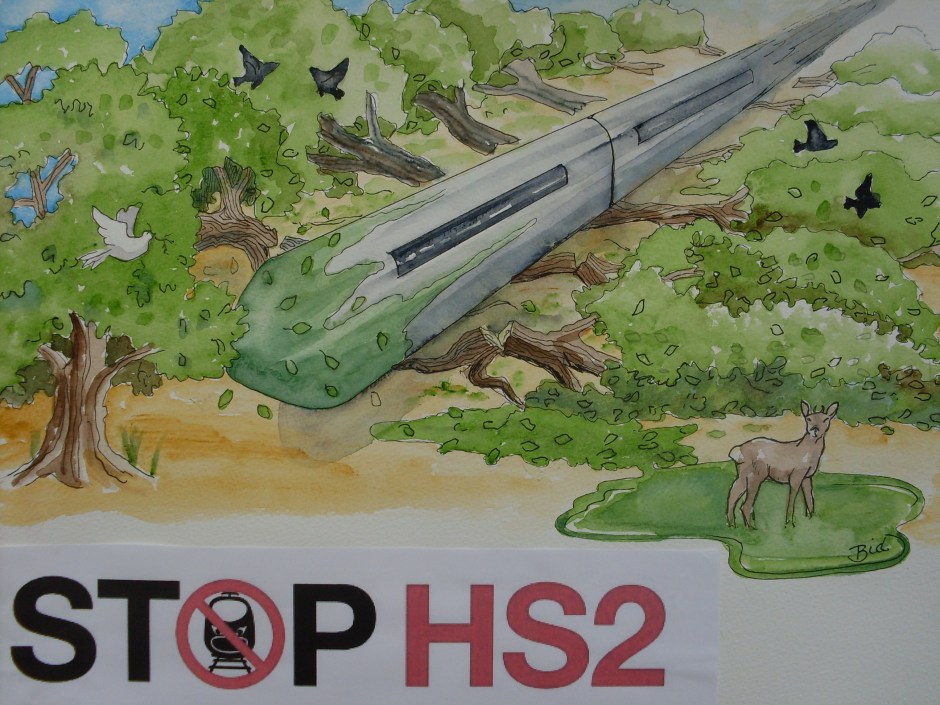
HS2 temporary reprieve for ancient woodlands

At least 108 ancient woods are threatened with loss or damage from the two phases of HS2, with phase one already underway. A review of the HS2 project has been set up by the government and I have raised the issue of a complete suspension of all environmentally damaging work with the review team. Extinction rebellion have joined with local campaigners and with Chris Packham to organise protests against the work going ahead.

Work on the woodlands has now been suspended, which is great. These woodlands are crucial spots for biodiversity; the trees are hundreds of years old and have therefore become prized spots for rare invertebrates, bats and birds. However, there are many other habitats that need preserving while the review takes place.

Colne Valley is a good example of a site that needs treating with caution. It is not only beautiful, its aquifer is one of the main water supplies for London. Local campaigners have today sent HS2 a warning notice of intended legal action if the company goes ahead with plans to drive, a hole 30m deep, straight through the sub-soil of a highly polluted area and into the permeable rock of the aquifer below. This would potentially be a criminal act, as it would impact on the water supply of several million people.

A local pumping station had to be closed down a few years ago because of pollution from a local landfill site. Local greens have evidence that the closure of that pumping station has changed the flow of the underground water and it now goes directly under where HS2 are doing their work. I have asked a series of questions about this in the Lords and intend to send a lot more. HS2 need to start taking their environmental responsibilities seriously.

Restore our democracy, not just the buildings

The home of our democracy is falling apart and it is plain for anyone to see. We have buckets in the corridors collecting drips, dregs and sometimes even gushes. Sometimes water even mixes with electricity – as happened with a leak in my office – and yet we have become so conditioned to these things that no one bats an eyelid and we just get on with it. Sadly, the same can be said of our democratic processes.

Continue reading “Restore our democracy, not just the buildings”

Podcast. Neil Woods “Ending the war on drugs”

I talk to Neil Woods, one of Britain’s most successful (ex) undercover police officers. 

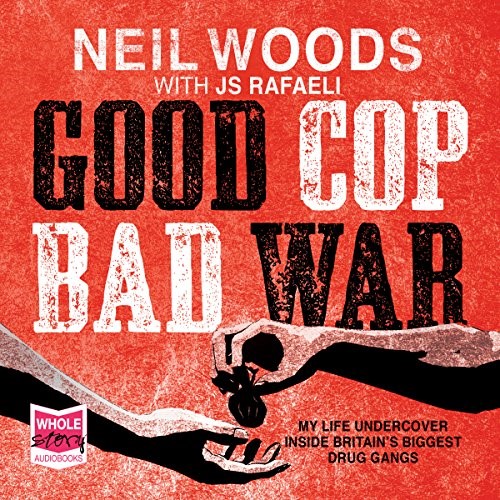
Neil has authored two fascinating books about his experiences as an undercover cop turned whistle blower “Good Cop, Bad War” and “Drugs Wars”. 

Neil’s personal experience as one of Britain’s most successful undercover officers deserves our respect and attention; he has played a key role in putting away numerous dealers for a collective total of over a 1,000 years. He survived the grave personal toll that brave officers can suffer in their losing fight against drugs gangs.

Having a knife to your throat, or being stripped naked at gunpoint can take a personal toll on the undercover officers who have tried to fight a war on drugs that can’t be won. Neil suffers from Post-Traumatic Street Disorder. Year after year the trade becomes more violent, as the police are more successful. The drugs war is an arms race. Police develop new tactics and drug gangs push back. Neil realised that the escalation by the gangs was a reaction to his work as an effective police officer.

County lines is the latest reaction by the gangs to that success.  Use of children is another innovation – a result of police success. Not so easy for police to infiltrate using established means. Gangs see the children as very disposable.  That is why some of the police want to increase the use of juveniles as police informants – child spies. Exposing this has been one of my big campaigns and is now the subject of legal action by a children’s charity.

Two things changed Neil’s personal view of the war on drugs. He got to know drug addicts and started to understand the traumas (often childhood abuse or neglect) that turned them towards drugs. He also realised that it was a war the police can’t win, despite all their success. In fact, the successes made things worse in the longer term.

Police now talk about ‘disruption’ not reduction. A stable market is less violent. Police often gather the low hanging fruit of dealers on streets, which thins it out, makes easier to create monopolies.

Drugs money has caused escalating violence on the streets and supports other forms of crime. It also provides the resources to finance endemic corruption within the authorities. Neil talks about how his instincts saved him from being betrayed by a fellow officer who had been planted into the police by a powerful gang.

Since prohibition started, the banned drugs have become stronger and cheaper. Neil had to take drugs on occasion as part of his cover.  One packet “smelt like urine from a glue sniffing cat”. Legislation from the 1980s onwards has moved away from harm reduction towards a moralising agenda of criminality.

It’s no coincidence that Brixton Riots happened ten years after Misuse of Drugs Act. The police were given a war chest of powers that government Ministers expected them to use. Persecution of black people was driven by drug policy and a clamp down on cannabis. 90% of stop and search has been for drugs.

The police have been lumbered with this war on drugs. It’s a huge drain on resources. For example, it’s a big impact on murder detection rate since declaration of the war on drugs. Despite scientific and forensic advances, the murder clear-up rate is down.

Society is paying a big cost for the war on drugs. People in prison cost money. Authorities are damaged by the corruption of drugs money.

The way to win the War on drugs is to stop fighting. Regulate them. Treat each drug differently, so for example with Heroin you go to the doctor.

A recent survey shows that 59% of people want to decriminalise or regulate cannabis use. That shows how public understanding is running ahead of the politicians from the two main parties. A big change is urgently needed.

Crowdfunder: referendum law breakers

For democracy to work fairly and effectively, all campaigners and parties must operate on a level playing field; no one can be above the rule of law.  Whichever way we voted in the referendum, we should all agree that wrong doing needs to be dealt with.

That is why I have joined with other concerned politicians and ex-politicians, Tom Brake MP, Ben Bradshaw MP and Fiona Mactaggart who believe in accountability and that is why we are asking for your support in our legal action. Continue reading “Crowdfunder: referendum law breakers”

Letter to Minister about systematic use of child spies

Dear Minister

Thank you for your positive response to my Oral Question on 18th March when I raised the issue of juveniles being used as Covert Human Intelligence Sources. As I mentioned during my question, I have information provided by a whistle-blower that there appear to be formal targets being set for regions to increase the use of juvenile CHIS to help in the tackling of county lines’ drug gangs. Continue reading “Letter to Minister about systematic use of child spies”