My QSD on Public Office (Accountability) Bill: Exclusion

To ask HMG why Members of Parliament and members of the House of Lords are excluded from Clause 11, “Offence of misleading the public”, of the Public Office (Accountability) Bill; and what consideration they have given to removing this exclusion. Continue reading “My QSD on Public Office (Accountability) Bill: Exclusion”

New Housing: Flood Risk

I do not want to get into the water reform Bill too much—it is a terrible Bill and the Government ought to withdraw it—but on this issue of flood risk, the fact is that houses are still being built on places that risk flooding. Some of the solutions are much wider than just putting a few ditches around the housing project. Continue reading “New Housing: Flood Risk”

How your Green Peers voted on the Employment Rights Bill 

Both Green Party peers voted against all Conservative amendments during the final stage of the Employment Bill being passed into law and voted for the overall Bill. Our MPs did the same.  Even though the government watered down the bill to backtrack slightly on employment rights from day one, the Employment Bill was a step forward. Continue reading “How your Green Peers voted on the Employment Rights Bill “

Crime and Policing Bill Committee Stage Day 15

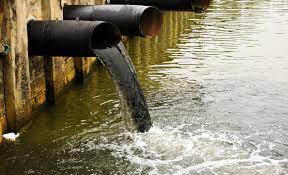
Regulators such as Ofwat have been in bed with the water industry bosses, and the Environment Agency has lost staff and legitimacy. Labour are wedded to private ownership of water and refuse to consider public ownership, even though it would be the most popular legislation they could enact this Parliament.

These amendments take a direct route to stopping pollution by making this personal to the people at the top. If they do not spend the money to invest and reduce pollution, then that is a crime. They are taking the public’s money and failing to improve. Continue reading “Crime and Policing Bill Committee Stage Day 15”

Crime and Policing Bill Committee Stage Day 13

A system that criminalises without regard to intent places an enormous burden on lawful expression and legitimate activity. Also Parliament and the public need assurance that proscription is based on sound reasoning, reviewed independently and grounded in evidence. One thing we did not really have when we were asked to proscribe Palestine Action was evidence. And proscriptions should be time-limited and expire after a set period, such as two years, unless Parliament is asked to proscribe yet again. At the moment, once proscription has happened, it in effect lasts forever. Continue reading “Crime and Policing Bill Committee Stage Day 13”

Crime and Policing Bill Committee Stage Day 10

At some point we have to accept that the police’s use of Facial Recognition Software needs regulation. We cannot accept that the police constantly mark their own homework. We were reassured that all the flaws in the algorithm and so on had been fixed, but clearly we cannot be sure of that because we do not have any way of knowing exactly what the flaws were and who has fixed them. Live facial recognition represents a huge departure from long-established principles of British policing. In this country, people are not required to identify themselves to the police unless they are suspected of wrongdoing. Live facial recognition turns that principle on its head by subjecting everyone in range of a camera to an automated identity check. It treats innocent members of the public as potential suspects and undermines the presumption of innocence. Continue reading “Crime and Policing Bill Committee Stage Day 10”