Extinction Rebellion’s application for Judicial Review has been scheduled for an urgent day-long hearing in the High Court on Thursday 24 October from 10.30am. Baroness Jenny Jones, Caroline Lucas MP, Clive Lewis MP, David Drew MP, Ellie Chowns MEP, George Monbiot, and Adam Allnut are bringing the action on behalf of Extinction Rebellion to challenge the police’s blanket ban on our protests across the whole of London for the remainder of the week. Continue reading “Court date 24th October – Extinction rebellion ban”
Category: Civil liberties
Government, the police and intelligence services are too easily given sweeping powers that they too often abuse
Jenny works with campaigners to defend our civil liberties
Read on for her latest posts on this topic
Legal challenge to Extinction Rebellion ban
A collection of Climate rebels, including Parliamentarians such as myself, Caroline Lucas MP and Ellie Chowns MEP, are taking the Met Police to court to challenge the Section 14 Order which bans Extinction Rebellion Protests throughout the whole of London. We believe that the ban is an abuse of the law and in violation of fundamental human rights and our lawyers are seeking an emergency hearing this afternoon. We expect that the Court will rule the ban null and void. Continue reading “Legal challenge to Extinction Rebellion ban”
Austerity and deaths on lawless roads
If you are a pedestrian who gets killed or suffers serious life changing injuries as a result of being hit by a car, there is more than a one in ten chance that the driver will fail to stop. One of the reasons our roads have become so lawless is the lack of resources put into police investigation and enforcement of road crimes.
Continue reading “Austerity and deaths on lawless roads”Latest Podcast out
Green Jenny Jones talk to Shane Collins about how to decriminalise drugs
I worked with Shane for years in the London Green Party, before he moved to Frome and got himself elected to Mendip District Council. He has been involved with writing the Green Party’s policy on drugs and he has a long history of campaigning on a host of issues. Continue reading “Latest Podcast out”
Podcast. Neil Woods “Ending the war on drugs”
I talk to Neil Woods, one of Britain’s most successful (ex) undercover police officers.
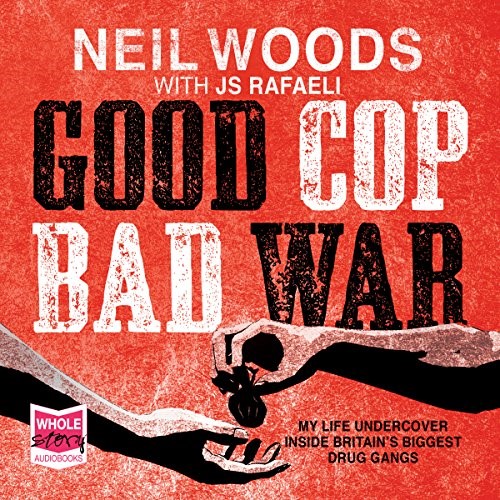
Neil has authored two fascinating books about his experiences as an undercover cop turned whistle blower “Good Cop, Bad War” and “Drugs Wars”.
Neil’s personal experience as one of Britain’s most successful undercover officers deserves our respect and attention; he has played a key role in putting away numerous dealers for a collective total of over a 1,000 years. He survived the grave personal toll that brave officers can suffer in their losing fight against drugs gangs.
Having a knife to your throat, or being stripped naked at gunpoint can take a personal toll on the undercover officers who have tried to fight a war on drugs that can’t be won. Neil suffers from Post-Traumatic Street Disorder. Year after year the trade becomes more violent, as the police are more successful. The drugs war is an arms race. Police develop new tactics and drug gangs push back. Neil realised that the escalation by the gangs was a reaction to his work as an effective police officer.
County lines is the latest reaction by the gangs to that success. Use of children is another innovation – a result of police success. Not so easy for police to infiltrate using established means. Gangs see the children as very disposable. That is why some of the police want to increase the use of juveniles as police informants – child spies. Exposing this has been one of my big campaigns and is now the subject of legal action by a children’s charity.
Two things changed Neil’s personal view of the war on drugs. He got to know drug addicts and started to understand the traumas (often childhood abuse or neglect) that turned them towards drugs. He also realised that it was a war the police can’t win, despite all their success. In fact, the successes made things worse in the longer term.
Police now talk about ‘disruption’ not reduction. A stable market is less violent. Police often gather the low hanging fruit of dealers on streets, which thins it out, makes easier to create monopolies.
Drugs money has caused escalating violence on the streets and supports other forms of crime. It also provides the resources to finance endemic corruption within the authorities. Neil talks about how his instincts saved him from being betrayed by a fellow officer who had been planted into the police by a powerful gang.
Since prohibition started, the banned drugs have become stronger and cheaper. Neil had to take drugs on occasion as part of his cover. One packet “smelt like urine from a glue sniffing cat”. Legislation from the 1980s onwards has moved away from harm reduction towards a moralising agenda of criminality.
It’s no coincidence that Brixton Riots happened ten years after Misuse of Drugs Act. The police were given a war chest of powers that government Ministers expected them to use. Persecution of black people was driven by drug policy and a clamp down on cannabis. 90% of stop and search has been for drugs.
The police have been lumbered with this war on drugs. It’s a huge drain on resources. For example, it’s a big impact on murder detection rate since declaration of the war on drugs. Despite scientific and forensic advances, the murder clear-up rate is down.
Society is paying a big cost for the war on drugs. People in prison cost money. Authorities are damaged by the corruption of drugs money.
The way to win the War on drugs is to stop fighting. Regulate them. Treat each drug differently, so for example with Heroin you go to the doctor.
A recent survey shows that 59% of people want to decriminalise or regulate cannabis use. That shows how public understanding is running ahead of the politicians from the two main parties. A big change is urgently needed.
Crowdfunder: referendum law breakers
For democracy to work fairly and effectively, all campaigners and parties must operate on a level playing field; no one can be above the rule of law. Whichever way we voted in the referendum, we should all agree that wrong doing needs to be dealt with.
That is why I have joined with other concerned politicians and ex-politicians, Tom Brake MP, Ben Bradshaw MP and Fiona Mactaggart who believe in accountability and that is why we are asking for your support in our legal action. Continue reading “Crowdfunder: referendum law breakers”
Letter to Minister about systematic use of child spies
Dear Minister
Thank you for your positive response to my Oral Question on 18th March when I raised the issue of juveniles being used as Covert Human Intelligence Sources. As I mentioned during my question, I have information provided by a whistle-blower that there appear to be formal targets being set for regions to increase the use of juvenile CHIS to help in the tackling of county lines’ drug gangs. Continue reading “Letter to Minister about systematic use of child spies”
Latest podcast
Jenny talks to Mike Schwarz, civil liberties lawyer, about the right to protest
Mike Schwarz has been a human rights lawyer at Bindmans for 25 years. He has represented numerous campaigners, including all three of Jenny’s part time staff. He describes the ups and downs of the right to protest over those years. Continue reading “Latest podcast”
Question to Minister on protecting the right to protest
Today around 3pm I’ll be raising the issue of freedom to protest with questions to the Government in the House of Lords about the Court of Appeal’s striking out an injunction obtained by INEOS in a secret court. The successful appeal was brought by two individuals and Friends of the Earth, representing an enormous victory for the right to protest. It will hopefully pave the way for more successful appeals by peaceful protestors who have had their human rights restricted by the frackers and other environmental vandals. Continue reading “Question to Minister on protecting the right to protest”
Minister agrees to examine police whistle-blower claim on child spies
I have asked the government to investigate a claim by a whistle-blower that the police are setting targets for regional police services to increase the use of juveniles as Covert Human Intelligence Sources (CHIS) as part of their efforts to combat county lines drug gangs. The whistle-blower approached my office with the information, but I can not verify the claim and have asked the Minister in the Lords to find out if this is happening. Continue reading “Minister agrees to examine police whistle-blower claim on child spies”